Does VO2 max predict how long you live?
On this page
Strongly. In 122,007 people tested at the Cleveland Clinic, the least fit had five times the risk of death of the fittest, and being below average was as risky as smoking. It’s a link seen in medical records, which no trial has tested directly.
Most people think of fitness as a nice extra on top of the numbers doctors check, like cholesterol and blood pressure. In one of the biggest studies of treadmill fitness, being below average carried as much extra risk as smoking or diabetes, and more than heart disease. A 2024 overview of 26 reviews found fitness a strong and consistent predictor of how long people live, and it’s a number you can change.
We’d treat getting out of the bottom half for your age as a health goal on the same level as not smoking, since in this study the gap was the same size. Every step up after that went with lower risk too.
The Cleveland Clinic study
From 1991 to 2014, 122,007 adults (average age 53) took a treadmill test at the Cleveland Clinic. Researchers followed them for a median of 8.4 years, and 13,637 died. Each person was ranked against others of the same age and sex.
| Comparison | Risk of death |
|---|---|
| Low (bottom quarter) against elite (top 2.3 percent) | 5.04 times |
| Below average against above average | 1.41 times |
| Smoking against not smoking | 1.41 times |
| Diabetes against none | 1.40 times |
| Coronary artery disease against none | 1.29 times |
| Elite against high | 0.77 times (23 percent lower) |
The researchers found no upper limit. Even the top 2.3 percent did better than the next group down.
Across millions of people
A 2009 review pooled 33 studies with 102,980 people. Each extra 1 MET of fitness (3.5 ml/kg/min, about 1 km/h faster running speed) went with 13 percent lower risk of death. A 2024 overview of 26 reviews and 20.9 million observations put it at 11 to 17 percent per MET, and found high fitness against low went with about half the risk.
The best objection
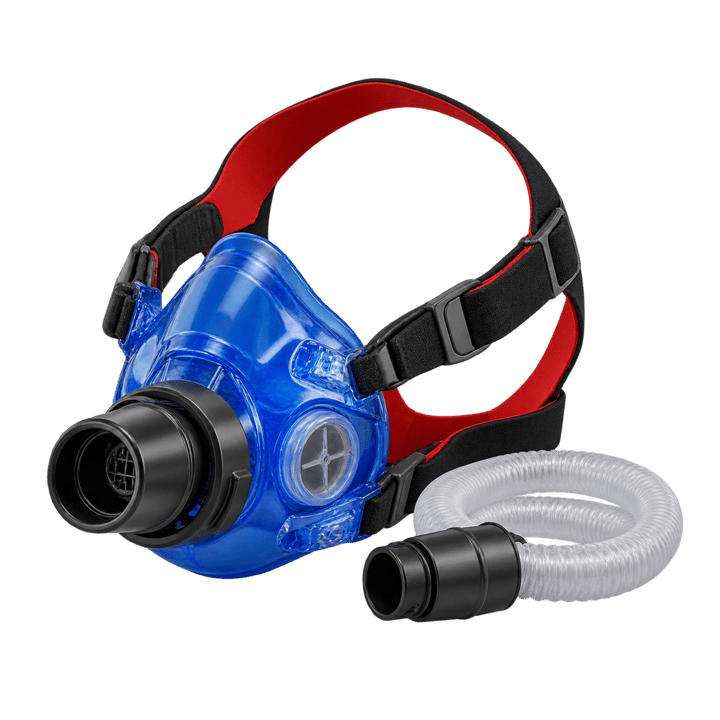
Maybe fit people live longer because they’re healthy, and illness makes people both unfit and short-lived. The Cleveland Clinic researchers adjusted for age, sex, BMI, smoking, diabetes, high blood pressure, high cholesterol, heart disease, kidney failure, and the use of aspirin, beta blockers and statins, and the link held. They were people sent for a stress test, though, and fitness was estimated from how far they got on the treadmill, without a mask.
The one big trial that assigned exercise, Generation 100, put 1,567 people aged 70 to 77 on training for five years. Deaths in the trained groups weren’t lower overall than in a control group that also followed activity guidelines. The interval group trended lower, but not by enough to be sure. The records show a strong link, this trial couldn’t confirm it for deaths, and a trial big enough to settle it hasn’t been run.
Where you stand, and what it means in years
Put your number in the tool below to see your group for your age and sex. The researchers’ comparisons are relative risks, and turning them into years of life is a job for a life table. lifespan.guide does that in its life expectancy calculator, and covers the same study from its side in does VO2 max predict how long you live?
What your result means, and what to do next
- Low or below average. Most of the health gap sits in the first step up, so this is where training pays the most.
- Above average or high. Hold it as the years pass. Holding steady after 40 already counts as climbing.
- The next group up is a target for one training block, but people respond very differently, from almost nothing to a lot.
- Make sure the number is real. A watch can be several points off. Get your true VO2 max
- Start the two layers. Cardio most days at a pace where you can still talk, and one or two hard sessions a week. How to raise it
- Retest the same way in 8 to 12 weeks. Same test, same route or same watch. Believe a change of more than 2 to 4 points.
4 sources
- Mandsager K and others, Association of Cardiorespiratory Fitness With Long-term Mortality Among Adults Undergoing Exercise Treadmill Testing, JAMA Network Open, 2018pmc.ncbi.nlm.nih.gov
- Kodama S and others, Cardiorespiratory fitness as a quantitative predictor of all-cause mortality and cardiovascular events in healthy men and women: a meta-analysis, JAMA, 2009europepmc.org
- Lang JJ and others, Cardiorespiratory fitness is a strong and consistent predictor of morbidity and mortality among adults: an overview of meta-analyses representing over 20.9 million observations from 199 unique cohort studies, British Journal of Sports Medicine, 2024pmc.ncbi.nlm.nih.gov
- Stensvold D and others, Effect of exercise training for five years on all cause mortality in older adults, the Generation 100 study, BMJ, 2020pmc.ncbi.nlm.nih.gov