Is Apple Watch VO2 max accurate?
On this page
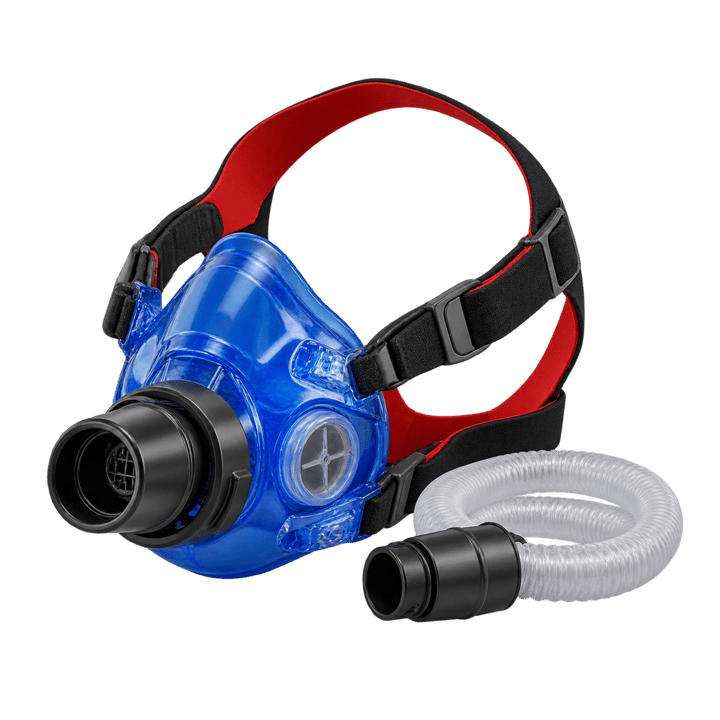
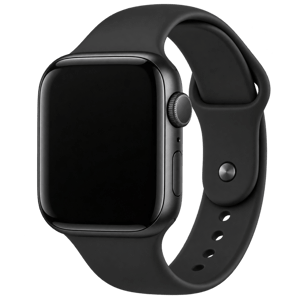
It runs low. In a 2026 lab check, Apple Watch Series 10 came in 6.25 points under a mask test on average and put only 5 of 35 people in their right fitness band. Use it to follow your trend, and check your rank with a field test.
The Health app calls it Cardio Fitness, gives it a level and sends a notification if it’s low for your age, so it’s easy to take the number as measured, but nothing on your wrist measures oxygen. The watch compares how your heart rate rises with your pace on outdoor walks, runs and hikes, the way you’d guess an engine’s power from how hard it revs at a known speed.
We’d keep the Apple number for the trend, since one watch compared with itself is fair. Then check it once with a 12-minute run or a 1-mile walk, and know that your real number is likely higher.
What the studies found
Researchers at University College Dublin had 40 adults wear a Series 10, then tested them on a treadmill with a mask within a week. They analyzed 35 of them (mean age 22.7, about half women).
- The watch came in 6.25 points low on average.
- For one person it could be anywhere from 18 points low to 6 points high.
- It put 5 people (14 percent) in their right fitness band, 12 one band off and 18 two or more bands off.
The same team found nearly the same gap a year earlier in 30 people wearing mostly Series 9 and Ultra 2 watches, 6.07 points low on average. In 2022, a review of 14 wearable studies listed Apple among the brands with no published lab check at all.
One limit is the people tested. They were young and fit, and 25 of the 35 were at the 80th percentile or higher. Nobody has published a Series 10 test in older or less fit people yet, so the gap could be bigger or smaller for you.
What 6 points low does to your rank
A man in his 40s whose watch says 38 is at about the 60th percentile, above average. His lab number is most likely about 44, somewhere from 38 to 50. At 44 he’d be at about the 78th percentile, in the top group. Switch the calculator below to Apple Watch and the bar slides right by 6.
Getting a cleaner number
Apple’s support page sets these rules.
- Only Outdoor Walk, Outdoor Run and Hiking workouts count. Indoor workouts, including gym equipment, don’t.
- It needs at least 24 hours of wear before the first estimate, and shows a range from 14 to 65.
- It uses your age, sex, weight and height, so keep your weight current in the Health app.
- Medicines that limit heart rate, like beta blockers, can make it too high, so add them to your Health profile.
You’ll find it in the Health app under Browse, then Heart, then Cardio Fitness.
What’s coming
In September 2026, Apple announced an at-home test to estimate VO2 max, which needs Apple Watch, AirPods Pro 3 or a third-party heart rate sensor. Apple hasn’t published how it works or how it compares with a lab.
The same watch also estimates calories from the same heart rate guess (see tdee.guide on Apple Watch calories) and HRV (hrv.guide on Apple Watch). For why your number stalls, see why isn’t my VO2 max updating?
What your result means, and what to do next
- Low, the bottom quarter for your age and sex. The Cleveland Clinic study found the most risk here, and the first step up is where most of the gain is.
- Below average. One 8 to 12 week block of training can move many people up a group.
- Above average or high. Hold it. The US middle drops about 4 points a decade, so a number that stays put climbs the ranks.
- The range around it is how far that source can be off. Only a lab test with a mask measures VO2 max.
- Check it once another way. A timed walk or run, or the everyday sanity checks, tells you if your watch runs high or low. Test it yourself
- Start the two layers. Cardio most days at a pace where you can still talk, and one or two hard sessions a week. How to raise it
- Retest the same way in 8 to 12 weeks. Same test, same route or same watch. Believe a change of more than 2 to 4 points.
6 sources
- Lambe R and others, Accuracy of VO2 max estimates from Apple Watch Series 10, Mayo Clinic Proceedings: Digital Health, 2026pmc.ncbi.nlm.nih.gov
- Lambe R and others, Investigating the accuracy of Apple Watch VO2 max measurements: a validation study, PLOS ONE, 2025pmc.ncbi.nlm.nih.gov
- Apple Support, Cardio Fitness on Apple Watch, checked 2026-11-14support.apple.com
- Molina-Garcia P and others, Validity of estimating the maximal oxygen consumption by consumer wearables: a systematic review with meta-analysis and expert statement of the INTERLIVE network, Sports Medicine, 2022pmc.ncbi.nlm.nih.gov
- Apple Newsroom, Apple advances health and fitness capabilities using Apple Intelligence, September 2026apple.com
- Kaminsky LA and others, Updated reference standards for cardiorespiratory fitness measured with cardiopulmonary exercise testing (FRIEND), Mayo Clinic Proceedings, 2022mayoclinicproceedings.org