What's my VO2 max?
Start with where your number comes from. Every source carries its own error, so the likely range around your number changes with it. Then see your rank for your age and sex, and your fitness age.
Where does your number come from?
About you, and your number
Apple Watch shows from 14 to 65, from outdoor walks, runs and hikes only.
38to50where a lab would likely put you, most likely 44. Your watch said 38.
You have the engine of a 39-year-old
38 is about the 60th percentile for men in their 40s. Group: above average
If a lab would say 44, that's about the 78th percentile.
How far to trust it. In a 2026 lab check, Apple Watch Series 10 came in 6.25 points low on average and put 5 of 35 people in their right fitness band. Good for your trend, rough for your rank. Lambe and others, Mayo Clinic Proceedings: Digital Health, 2026
When is a change real? Compare a source only with itself. A change smaller than about 2 to 4 points can be noise: a review of 14 studies put a meaningful change at 1.75 to 3.5 ml/kg/min.
What your result means, and what to do next
- Low, the bottom quarter for your age and sex. The Cleveland Clinic study found the most risk here, and the first step up is where most of the gain is.
- Below average. One 8 to 12 week block of training can move many people up a group.
- Above average or high. Hold it. The US middle drops about 4 points a decade, so a number that stays put climbs the ranks.
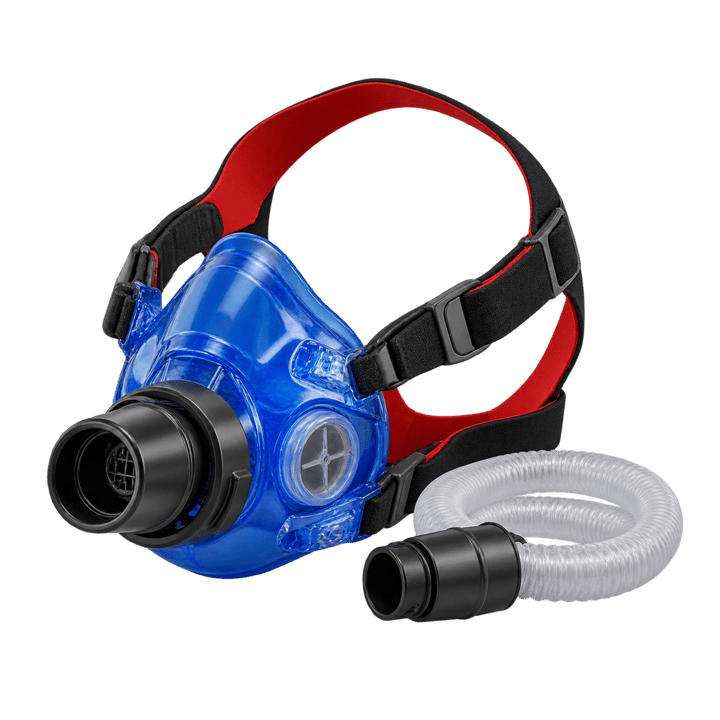
- The range around it is how far that source can be off. Only a lab test with a mask measures VO2 max.
- Check it once another way. A timed walk or run, or the everyday sanity checks, tells you if your watch runs high or low. Test it yourself
- Start the two layers. Cardio most days at a pace where you can still talk, and one or two hard sessions a week. How to raise it
- Retest the same way in 8 to 12 weeks. Same test, same route or same watch. Believe a change of more than 2 to 4 points.
How each source becomes a number
| Source | How | Likely range |
|---|---|---|
| Lab test | Measured with a mask | None |
| Apple Watch | The watch's number. A lab would likely say 6.25 higher | About 6 either way |
| Garmin or another running watch | The watch's number | About 5 either way |
| Fitbit, Oura or WHOOP | The number, with no independent test of current models | About 8 either way |
| 12-minute run | (meters minus 504.9) divided by 44.73 | About 7 either way |
| 1.5-mile run | 483 divided by minutes, plus 3.5 | About 7, borrowed from the 12-minute run |
| 1-mile walk | 132.853 minus 0.0769 x pounds, minus 0.3877 x age, plus 6.315 for men, minus 3.2649 x minutes, minus 0.1565 x heart rate | 0.355 liters a minute over your weight, about 4.4 at 80 kg |
| Beep test | 6 x speed minus 27.4, where speed is 8 plus half the level, in km/h | About 4.4 either way |
| Resting heart rate | 15.3 x max heart rate over resting heart rate | 2.7 with a measured max, 4.7 with 208 minus 0.7 x age |
The likely range is where about 2 in 3 people would land on a lab test. For Apple Watch it comes from the 2026 Series 10 study, where the watch came in 6.25 points low on average, with limits of agreement from 18.23 below to 5.73 above. That's why the range sits above the watch's number. For the other watches it comes from a review of 14 studies: watches that estimate from your runs came out right on average, give or take about 5, and the pooled range is wider.
Your rank and your fitness age
Your rank is your place on the US FRIEND 2022 chart for your decade and sex, built from 16,278 treadmill tests in 34 US labs, by straight lines between the published deciles. The table stops at the 10th and 90th percentiles, so past those the calculator says under the 10th or over the 90th. The groups are the plain names the 122,007-person Cleveland Clinic study used: low under the 25th, below average to the 49th, above average to the 74th, high from the 75th.
Fitness age is our own definition: the age at which your number would be exactly the US median for your sex, by straight lines through the medians at 25, 35 and so on up to 85.
When is a change real?
Compare a source only with itself, in the same conditions. The review of 14 studies put a meaningful change at 1.75 to 3.5 ml/kg/min, smaller than one watch's error. So a watch moving 1 point is noise, and a 12-minute run 3 points further than 8 weeks ago is worth believing.
Race times are out of this version: no primary source for the race-time equations could be opened.
13 sources
- Kaminsky LA and others, Updated reference standards for cardiorespiratory fitness measured with cardiopulmonary exercise testing (FRIEND), Mayo Clinic Proceedings, 2022mayoclinicproceedings.org
- Lambe and others, Apple Watch Series 10 VO2 max against a lab mask test, Mayo Clinic Proceedings: Digital Health, 2026pmc.ncbi.nlm.nih.gov
- The INTERLIVE network, the validity of wearable VO2 max estimates, a review of 14 studies, 2022pmc.ncbi.nlm.nih.gov
- The Cooper 12-minute run (Cooper 1968), the formula as printed inpmc.ncbi.nlm.nih.gov
- Soares and others, the Cooper test against a lab test in 73 college athletes, 2026pmc.ncbi.nlm.nih.gov
- The Cooper Institute, 50 years of the Cooper 12-minute run (the 1.5-mile formula)cooperinstitute.org
- Kline GM and others, Estimation of VO2max from a one-mile track walk, 1987europepmc.org
- The Rockport equation in ml/kg/min, as printed in Predovan and others, 2021pmc.ncbi.nlm.nih.gov
- Léger LA and others, The multistage 20 metre shuttle run test, 1988europepmc.org
- Léger L and Gadoury C, Validity of the 20 m shuttle run test in adults, 1989europepmc.org
- Uth N and others, Estimation of VO2max from the ratio between HRmax and HRrest, 2004europepmc.org
- Tanaka H and others, Age-predicted maximal heart rate revisited, 2001europepmc.org
- Apple, Using VO2 max on Apple Watchsupport.apple.com