
VO2 max only matters if you're an athlete
Short answerNo
On this page
No. The biggest health gains are at the bottom of the chart. In 122,007 people tested at the Cleveland Clinic, being below average for your age and sex, against above average, carried 1.41 times the risk of death, the same as smoking. Across 33 studies, each MET higher went with 13 percent lower risk.
What we’d do
If you’ve never thought of yourself as an athlete, VO2 max is more your number than theirs. Find out where you stand for your age with a watch or a 12-minute walk or run. If you’re in the bottom half, brisk walking most days and one harder session a week is the most useful fitness change you can make, and you don’t need to run a step. Then hold what you build as you age.
If you remember three things
- Low fitness carried as much risk as smoking. 1.41 times the risk of death for below average against above average.
- The first step up is the biggest. Low against middling fitness was 1.40 times the risk across 33 studies, most of the gap to the fittest.
- It decides what daily life costs you. Late in life, below about 18 for men and 15 for women, living on your own gets hard.
Why people believe it
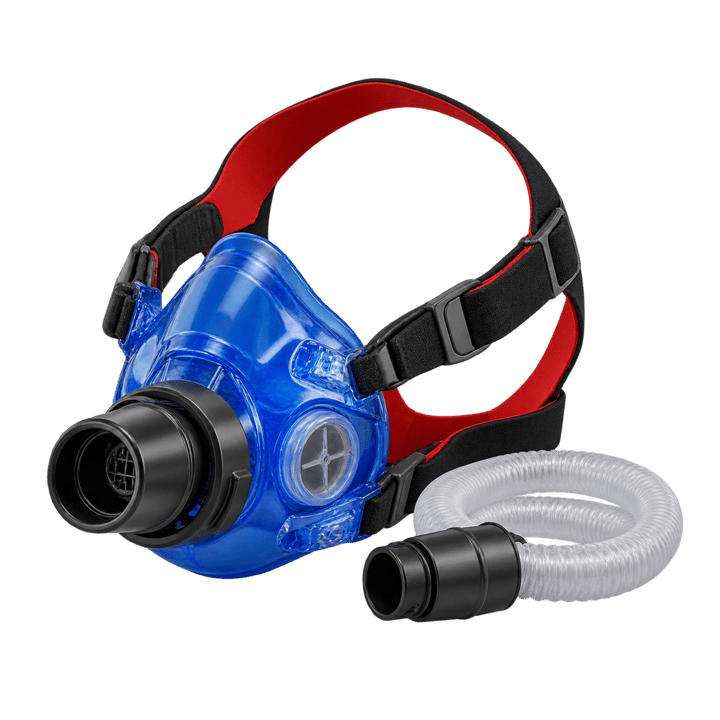
You hear about VO2 max when a cyclist or a marathoner posts a huge number, or in a sports science story about Olympians. It’s measured with a mask on a treadmill, which looks like something for elite athletes. And the numbers that make the news are in the 70s and 80s, so it’s easy to decide it has nothing to do with you.
A simple way to picture it
Think of the spare capacity on your phone’s battery. If you only ever use a quarter of it a day, you never think about it. When it’s old and holds half a charge, a normal day drains it by dinner.
Your VO2 max is your body’s spare capacity. Climbing stairs, carrying groceries or catching a bus all use a share of it. The lower your ceiling, the bigger the share each of those takes, and late in life ordinary days can take most of it.

Where the risk is
The Cleveland Clinic study sorted 122,007 patients sent for a treadmill test by fitness for their age and sex, and followed them for a median of 8.4 years.
| Comparison | Risk of death |
|---|---|
| Low (bottom quarter) against elite (top 2.3 percent) | 5.04 times |
| Below average against above average | 1.41 times |
| Smoking | 1.41 times |
| Diabetes | 1.40 times |
| Coronary artery disease | 1.29 times |
Being in the bottom half for your age carried as much risk as smoking, and more than heart disease. These were ordinary patients sent by their doctors, with an average age of 53, not athletes.
A pooled analysis of 33 studies with 102,980 people adds the shape. People with low fitness, under 7.9 METs (about 28 ml/kg/min), had 1.40 times the risk of death of people with middling fitness, and 1.70 times that of the fittest. Most of the difference sat in the first step up from the bottom. For a woman in her 40s, 28 is a little above the middle of her age group. For a man in his 40s, it’s in the bottom quarter.
What it means for daily life
The physiologist R. J. Shephard looked at what falling fitness does late in life. Below about 18 ml/kg/min for men and 15 for women, loss of independence seems likely, and most people reach that line at 80 to 85. The US middle for people in their 80s is 17.6 for men and 15.4 for women, right on it. Shephard found that regular aerobic exercise can take 10 or more years off your biological age and might keep you independent about that much longer.
Before that, it shows up in smaller ways. A high VO2 max makes four flights of stairs a conversation, a long hike with your kids a pleasure, and a sprint for a train no big deal. A low one turns each of those into the hardest thing you do all day.
Athletes need more than VO2 max anyway
Even for racing, VO2 max is only the ceiling. How efficiently you run, how close to that ceiling you can hold for an hour, and the pace at which lactate builds up decide who wins (Bassett and Howley, 2000). Two runners with the same VO2 max can finish minutes apart. For health, the ceiling is the part to care about, because it’s what the big studies of survival measured.
The best case for “athletes only”
“The studies only show a link. Maybe fit people are healthier for other reasons.”
That’s possible, and nobody can rule it out completely. All the big studies follow people rather than assigning them. The Cleveland Clinic results were adjusted for age, sex, body mass index, heart disease, diabetes, high blood pressure, cholesterol, kidney failure, smoking and medicines, and the link held. An overview of 26 reviews and 20.9 million observations found the same link everywhere it looked, with each MET higher going with 11 to 17 percent lower risk of death. The one long training trial in people in their 70s, Generation 100, found a trend toward fewer deaths in the interval group that wasn’t clear enough to rule out chance.
Either way, the advice doesn’t change. Getting fitter is cheap, it works for almost everyone who does enough of it, and in 24 trials brisk walking alone raised VO2 max in people who had been inactive. Why it predicts how long you live has the full case, and lifespan.guide turns habits into years in what adds the most years.
8 sources
- Mandsager K and others, Association of cardiorespiratory fitness with long-term mortality among adults undergoing exercise treadmill testing, JAMA Network Open, 2018pmc.ncbi.nlm.nih.gov
- Kodama S and others, Cardiorespiratory fitness as a quantitative predictor of all-cause mortality and cardiovascular events in healthy men and women: a meta-analysis, JAMA, 2009europepmc.org
- Lang JJ and others, Cardiorespiratory fitness is a strong and consistent predictor of morbidity and mortality among adults: an overview of meta-analyses representing over 20.9 million observations from 199 unique cohort studies, British Journal of Sports Medicine, 2024pmc.ncbi.nlm.nih.gov
- Shephard RJ, Maximal oxygen intake and independence in old age, British Journal of Sports Medicine, 2009europepmc.org
- Kaminsky LA and others, Updated reference standards for cardiorespiratory fitness measured with cardiopulmonary exercise testing (FRIEND), Mayo Clinic Proceedings, 2022mayoclinicproceedings.org
- Murphy MH and others, The effect of walking on fitness, fatness and resting blood pressure: a meta-analysis of randomised, controlled trials, Preventive Medicine, 2007europepmc.org
- Bassett DR and Howley ET, Limiting factors for maximum oxygen uptake and determinants of endurance performance, Medicine and Science in Sports and Exercise, 2000europepmc.org
- Stensvold D and others, Effect of exercise training for five years on all cause mortality in older adults, the Generation 100 study: randomised controlled trial, BMJ, 2020pmc.ncbi.nlm.nih.gov