After 60 it's too late to raise your VO2 max
Short answerNo
On this page
No. Five Dallas men who trained for six months at 50 won back all the oxygen use they’d lost in 30 years. People aged 70 to 77 who trained twice a week held their fitness flat for five years, when a drop of 3.5 points was expected. The interval group ended highest.
What we’d do
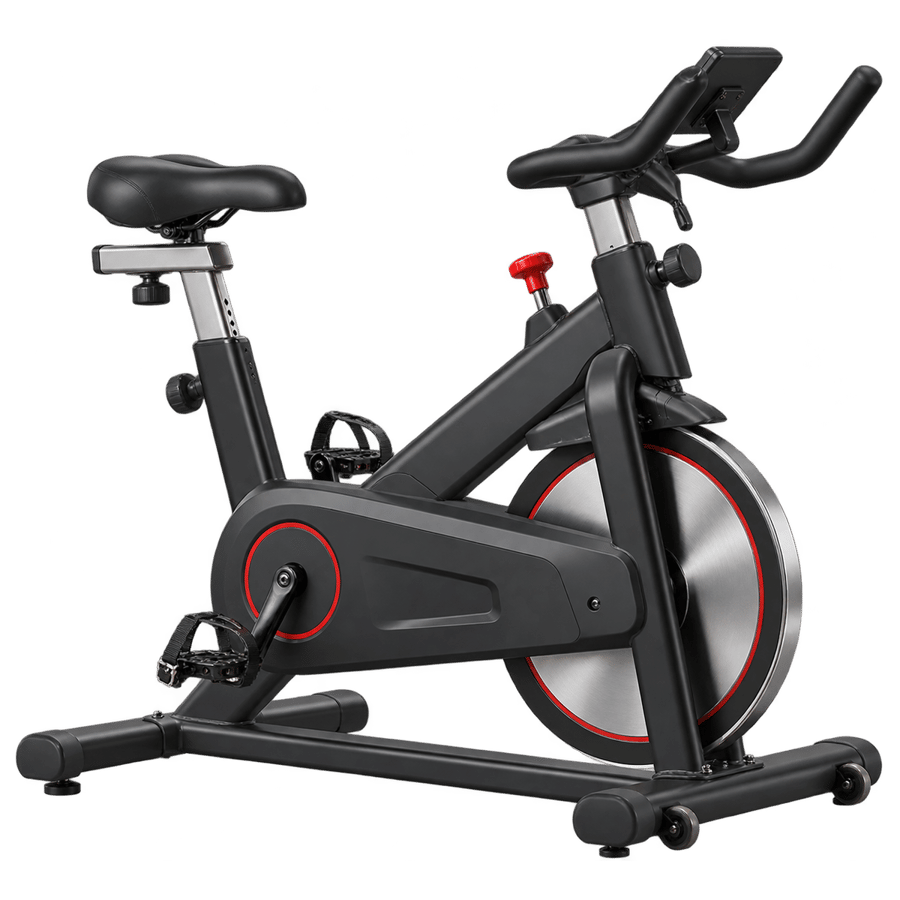
Start now, whatever your age, and start easy. Walk briskly most days for a few weeks, then add two harder sessions a week, like an uphill walk or a bike with four 4-minute efforts. Check with your doctor first if you have a heart condition, symptoms during exercise or take a heart rate medicine. After 60, count holding steady as winning, because the people around you are losing more every decade.
If you remember three things
- The Dallas men got 30 years back in six months. Their oxygen use at 50 rose 14 percent, to what it had been at 20.
- People in their 70s held steady for five years. No group lost fitness, and the interval group ended 0.7 points higher.
- Holding flat moves you up. In your 70s the average person loses more than 20 percent a decade.
Why people believe it
The numbers fall with age, and they fall faster as you go. In 810 healthy adults followed for about eight years, VO2 max dropped 3 to 6 percent a decade in the 20s and 30s and more than 20 percent a decade in the 70s, at every level of activity. Watching that happen to yourself, it’s easy to think training can’t keep up.
Three weeks in bed against 30 birthdays
In 1966, five healthy 20-year-old men in Dallas spent three weeks in bed for a study. In 1996 researchers found the same five men, now 50, and tested them again.
Over 30 years their oxygen use had fallen only 11 percent, from 3.30 to 2.90 liters a minute. Their weight had gone from 77 to 100 kg. The researchers wrote that the three weeks in bed at 20 “had a more profound impact on physical work capacity than did 3 decades of aging.”
Then they trained the men for six months. Oxygen use rose 14 percent, from 2.9 back to 3.3 liters a minute, the level they’d had at 20. “One hundred percent of the age-related decline in aerobic power” over 30 years was reversed, in the authors’ words.
Age did leave a mark. None of the men got back to the peak they’d reached after training at 20. And per kilogram they reached 36, not their old 43, because most of the extra weight stayed.
Five years in Trondheim
The Generation 100 trial in Norway tested training late in life. It assigned 1,567 people aged 70 to 77 for five years to two sessions a week of 4-minute intervals at about 90 percent of their peak heart rate (about 16 on the 6 to 20 effort scale), two sessions a week of 50 minutes at about 70 percent (about 13), or the national advice to stay active.
From earlier studies the researchers expected VO2 max to fall by at least 3.5 ml/kg/min over five years. It didn’t fall in any group. After five years the interval group was 0.7 points higher than the other two.
The volunteers were fitter than most people their age, starting at 28.6 on average, near the top 10 percent on the US chart for people in their 70s, and the guidelines group exercised too. But it shows that the steep slope in your 70s isn’t fixed if you keep training, hard minutes included.
A simple way to picture it
Think of walking up a down escalator. If you stand still, you go down. If you walk at an easy pace, you stay roughly where you are. Walk faster and you climb.
After 60 the escalator speeds up. Staying in place takes real effort, and it’s still a win, because everyone standing still is heading down faster than before.
Why it counts more late in life
The independence line. Below about 18 ml/kg/min for men and 15 for women, loss of independence seems likely, and most people reach it at 80 to 85 (Shephard 2009). The US middle for people in their 80s is 17.6 for men and 15.4 for women, right on the line. Shephard found regular aerobic exercise can take 10 or more years off your biological age and might keep you independent for about that much longer.
The risk. In the Cleveland Clinic study of 122,007 treadmill tests, patients aged 70 and older in the fittest group had 0.71 times the risk of death of those in the next group down. The gains kept counting late in life.
The rank. Because the chart falls under you, a man who holds a VO2 max of 30 from his 60s into his 70s goes from about the 74th percentile for his age to over the 90th.
The best case for “too late”
“Older people respond less, get hurt more and can’t do intervals safely.”
Older people do lose fitness faster, and joints and hearts need more care. That’s why we’d start with walking and pick the bike, the rower or the uphill walk over sprints. But the trial that tested intervals in people in their 70s ran for five years and found the interval group fittest at the end. A pooled analysis of 28 trials found intervals beat steady training by a bit more in the older participants, though those trials only went up to age 45. Nothing in the evidence says the body stops responding at 60.
If you have a heart condition, symptoms like chest pain or fainting during exercise, or take a beta blocker, see your doctor first. Is it safe to push hard? has the list.
lifespan.guide has the same argument for adding years, in after 50 it’s too late to add years.
8 sources
- McGuire DK and others, A 30-year follow-up of the Dallas Bedrest and Training Study: I. Effect of age on the cardiovascular response to exercise, Circulation, 2001europepmc.org
- McGuire DK and others, A 30-year follow-up of the Dallas Bedrest and Training Study: II. Effect of age on cardiovascular adaptation to exercise training, Circulation, 2001europepmc.org
- Stensvold D and others, Effect of exercise training for five years on all cause mortality in older adults, the Generation 100 study: randomised controlled trial, BMJ, 2020pmc.ncbi.nlm.nih.gov
- Fleg JL and others, Accelerated longitudinal decline of aerobic capacity in healthy older adults, Circulation, 2005europepmc.org
- Shephard RJ, Maximal oxygen intake and independence in old age, British Journal of Sports Medicine, 2009europepmc.org
- Mandsager K and others, Association of cardiorespiratory fitness with long-term mortality among adults undergoing exercise treadmill testing, JAMA Network Open, 2018pmc.ncbi.nlm.nih.gov
- Kaminsky LA and others, Updated reference standards for cardiorespiratory fitness measured with cardiopulmonary exercise testing (FRIEND), Mayo Clinic Proceedings, 2022mayoclinicproceedings.org
- Milanović Z, Sporiš G and Weston M, Effectiveness of high-intensity interval training and continuous endurance training for VO2max improvements: a systematic review and meta-analysis of controlled trials, Sports Medicine, 2015europepmc.org