How do I see my VO2 max on Garmin?
Run outdoors for at least 10 minutes at 70 percent of your max heart rate or more, save the run, then scroll through the performance screens. The Garmin Connect app shows the same number with its history and your rank for your age and sex.
You’ve had the watch a week, done a few gym sessions and a treadmill run, and there’s still no VO2 max anywhere. Garmin’s running estimate only comes from outdoor runs with GPS, so a watch that has only seen indoor workouts has nothing to work from.
We’d set your max heart rate in the profile before your first run, since Garmin lists it as one of the two things that make the estimate most accurate.
Step by step
These steps are from the Forerunner 265 manual. Button names differ a little between models, and the requirements are the same.
- Fill in your user profile and set your max heart rate. Garmin says both are needed for the most accurate estimate. A formula can miss your real max by about 11 beats, so use a measured one if you have it.
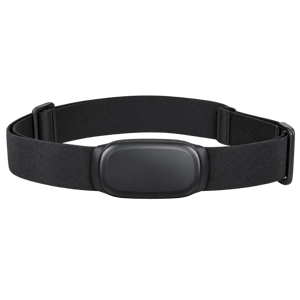
- Start a running activity outdoors. Wrist heart rate works, or a paired chest strap.
- Run at a moderate or hard effort, reaching at least 70 percent of your max heart rate.
- After at least 10 minutes, select Save.
- Press Up or Down to scroll through the performance measurements. VO2 max shows as a number, a word and a position on a colored gauge.
Garmin’s manual warns that the estimate “may seem inaccurate at first.” The watch needs a few runs to learn how your heart responds, like a new running partner who needs a few runs together before they can judge your pace.
On a bike
Cycling gets its own, separate estimate. It needs a power meter paired with the watch, plus wrist or chest heart rate, and a ride at a steady, hard effort for at least 20 minutes. Without a power meter, rides don’t produce a VO2 max.
What the colors mean
| Color | Garmin’s label | The Cooper Institute’s percentile |
|---|---|---|
| Purple | Superior | 95th and up |
| Blue | Excellent | 80th to 95th |
| Green | Good | 60th to 80th |
| Orange | Fair | 40th to 60th |
| Red | Poor | Under 40th |
Those percentiles come from The Cooper Institute’s data and run well above the US FRIEND chart. A woman in her 40s at 30 is “Poor” on Garmin and at about the 70th percentile on FRIEND. The calculator below ranks a Garmin number on FRIEND, with about 5 points either way for watch error.
If it won’t appear or looks wrong
- Trail and ultra runs can skew it, and Garmin lets you switch off VO2 max recording for those activity types.
- Check your max heart rate. Garmin judges every run against it, and in 3,320 Norwegians the older age formulas ran low for people over 30.
- Give it a few outdoor runs before judging it.
More in why isn’t my VO2 max updating? and is Garmin VO2 max accurate?
What your result means, and what to do next
- Low, the bottom quarter for your age and sex. The Cleveland Clinic study found the most risk here, and the first step up is where most of the gain is.
- Below average. One 8 to 12 week block of training can move many people up a group.
- Above average or high. Hold it. The US middle drops about 4 points a decade, so a number that stays put climbs the ranks.
- The range around it is how far that source can be off. Only a lab test with a mask measures VO2 max.
- Check it once another way. A timed walk or run, or the everyday sanity checks, tells you if your watch runs high or low. Test it yourself
- Start the two layers. Cardio most days at a pace where you can still talk, and one or two hard sessions a week. How to raise it
- Retest the same way in 8 to 12 weeks. Same test, same route or same watch. Believe a change of more than 2 to 4 points.
4 sources
- Garmin, Forerunner 265 Owner's Manual, About VO2 Max. Estimates, checked 2026-11-14www8.garmin.com
- Garmin, Forerunner 265 Owner's Manual, VO2 Max. Standard Ratings (data from The Cooper Institute), checked 2026-11-14www8.garmin.com
- Nes BM and others, Age-predicted maximal heart rate in healthy subjects: the HUNT fitness study, Scandinavian Journal of Medicine and Science in Sports, 2013europepmc.org
- Kaminsky LA and others, Updated reference standards for cardiorespiratory fitness measured with cardiopulmonary exercise testing (FRIEND), Mayo Clinic Proceedings, 2022mayoclinicproceedings.org