Why isn't my VO2 max updating?
Watches update VO2 max only from certain workouts. Apple Watch uses outdoor walks, runs and hikes, and Garmin needs outdoor runs of 10 minutes or more. Indoor and gym sessions don’t count on Apple Watch, and the number moves slowly anyway.
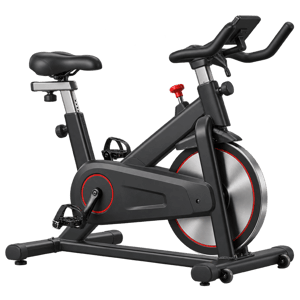
You’ve been training hard for a month, mostly on the bike, the treadmill or the rowing machine, and the number hasn’t budged. It’s frustrating, and it makes training feel pointless. Usually the watch hasn’t seen the workouts that feed it. A VO2 max estimate is like a speed camera on one road, which only clocks you where it’s set up.
We’d log at least one outdoor walk or run a week with the watch, and judge the number by the month, since real gains take weeks to show.
What each device counts
| Device | What counts | What doesn’t |
|---|---|---|
| Apple Watch | Outdoor Walk, Outdoor Run and Hiking workouts | Indoor workouts, including gym equipment |
| Garmin, running | Outdoor runs with GPS of 10 minutes or more, at 70 percent of your max heart rate or more | Runs that never get hard enough, and trail or ultra runs if you’ve switched them off |
| Garmin, cycling | Rides of 20 minutes or more at a steady, hard effort with a power meter | Rides without a power meter |
| Oura | Walks, runs and hikes recorded with GPS, five of them before the first estimate | Oura offers it in Oura Labs, on Gen3 rings and later |
Apple also needs at least 24 hours of wear before the first estimate, and Garmin’s manual says its estimate “may seem inaccurate at first” while it learns from a few runs.
Why it moves slowly even when it works
Fitness changes slowly, and the estimate follows. In the Norwegian 4x4 trial, fit young men training hard three times a week went from 55.5 to 60.4 over eight weeks, about 0.6 points a week. A flat line from one week to the next is normal.
A 2022 review of 14 wearable studies put a change that’s meaningful for health at 1.75 to 3.5 points. That’s about the size of change to look for over a couple of months.
Getting it moving again
- Add one outdoor session a week that your watch counts, a brisk walk with some hills or an easy run.
- Start it as the right workout type on the watch (Outdoor Walk, not Indoor Walk), with GPS on.
- Check your profile for your current weight, and your max heart rate on Garmin.
- Retest with a field test every 8 to 12 weeks for a number that doesn’t depend on which workouts the watch saw (see how can I test my VO2 max at home?).
For how long a real change takes, see how long does it take to improve VO2 max?
What your result means, and what to do next
- Low, the bottom quarter for your age and sex. The Cleveland Clinic study found the most risk here, and the first step up is where most of the gain is.
- Below average. One 8 to 12 week block of training can move many people up a group.
- Above average or high. Hold it. The US middle drops about 4 points a decade, so a number that stays put climbs the ranks.
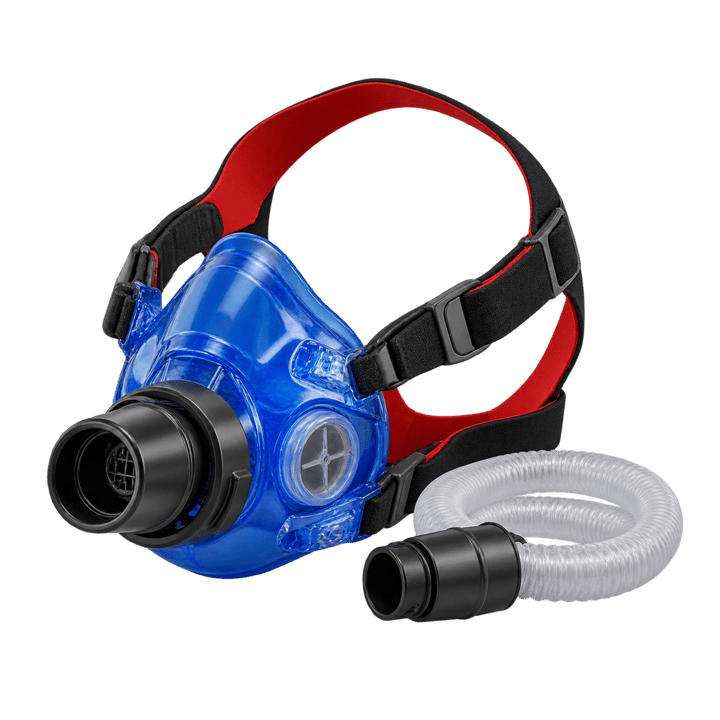
- The range around it is how far that source can be off. Only a lab test with a mask measures VO2 max.
- Check it once another way. A timed walk or run, or the everyday sanity checks, tells you if your watch runs high or low. Test it yourself
- Start the two layers. Cardio most days at a pace where you can still talk, and one or two hard sessions a week. How to raise it
- Retest the same way in 8 to 12 weeks. Same test, same route or same watch. Believe a change of more than 2 to 4 points.
5 sources
- Apple Support, Cardio Fitness on Apple Watch, checked 2026-11-14support.apple.com
- Garmin, Forerunner 265 Owner's Manual, About VO2 Max. Estimates, checked 2026-11-14www8.garmin.com
- Oura, VO2 max, checked 2026-11-14ouraring.com
- Molina-Garcia P and others, Validity of estimating the maximal oxygen consumption by consumer wearables: a systematic review with meta-analysis and expert statement of the INTERLIVE network, Sports Medicine, 2022pmc.ncbi.nlm.nih.gov
- Helgerud J and others, Aerobic high-intensity intervals improve VO2max more than moderate training, Medicine and Science in Sports and Exercise, 2007europepmc.org