Should I get a lab VO2 max test?
On this page
Get one if you train seriously, want your real max heart rate for your zones, or your watch and a field test disagree by a lot. For most people a 12-minute run or 1-mile walk, repeated the same way, does the job.
Longevity clinics and podcasts have made the lab test sound like something every adult needs, the way you’d get a cholesterol check. It is the gold standard, since it’s the only test that measures the oxygen you breathe. But you’re paying for a number that a free test can put within about 4 to 7 points, and the free test is easier to repeat.
We’d skip it unless one of the three reasons above fits you. If one does, a single good test is enough to calibrate everything else for years.
What a lab test gives you that a field test can’t
- Your real max heart rate. The formulas guess it from your age, and in 3,320 Norwegians with a verified max test, a person’s real max sat within about 11 beats of the best formula only about 2 times in 3. A test to exhaustion shows yours, and every zone and interval target is built on it.
- A check on your watch. In a 2026 lab check, Apple Watch Series 10 came in 6.25 points low on average. One lab number tells you how far off your own watch runs.
- The measured number itself, which is what the US reference chart is built from.
It works like weighing yourself once on a doctor’s scale to see how far off your bathroom scale is. After that, the bathroom scale is fine for the trend.
What it costs
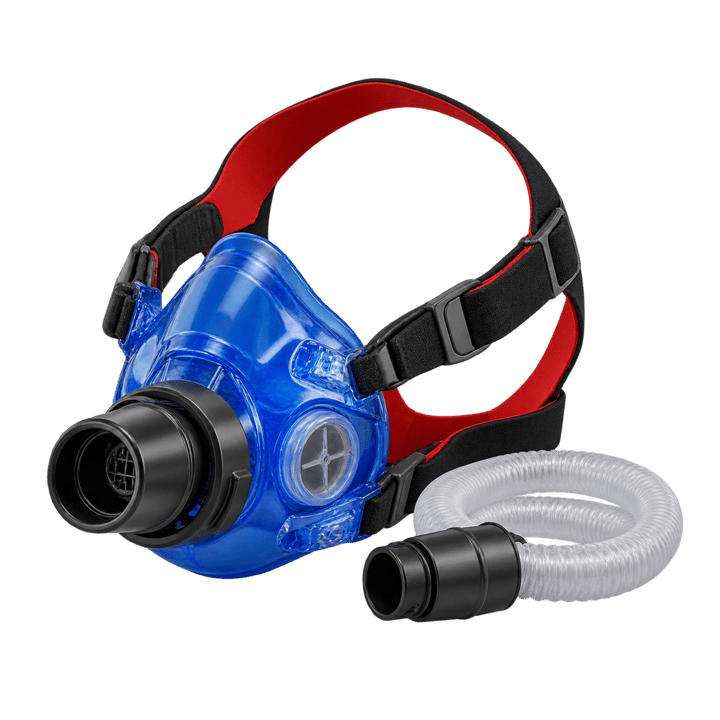
In November 2026, US testing chains charged from $145 (Fitnescity through Quest, with over 400 partner sites, the price varying by site) to $249 (Superpower, run by Fitnescity at partner sites). Both use a mask on a treadmill or bike, run to maximal effort, and include a 20-minute call with a physician. Superpower lists seven values in its report, including VO2 max, peak METs and how fast your heart rate drops in the first two minutes after.
What to ask before you book
- Is it a mask test to your max? Some fitness assessments estimate from heart rate without measuring gas. Quest describes Fitnescity’s as “a maximal exertion test.”
- Treadmill or bike? Bike numbers run lower. In the US chart, men in their 40s had a middle value of 27.4 on a bike against 35.3 on a treadmill, so rank a bike result on the bike chart.
- Will I get my max heart rate? It’s the most useful number after VO2 max itself.
Who should see a doctor first
Superpower requires a health screen and a physician’s sign-off before booking. The US sports medicine screening rules ask the same of anyone with chest pain, fainting or unusual breathlessness during exercise, or known heart, metabolic or kidney disease, and they ask inactive people to build up first. For those people the right test is one a doctor orders.
If none of this applies, start free with a test you can do at home. If you do get a lab number, enter it below to see your rank, or set your zones from your measured max in the heart rate zones tool.
What your result means, and what to do next
- Low, the bottom quarter for your age and sex. The Cleveland Clinic study found the most risk here, and the first step up is where most of the gain is.
- Below average. One 8 to 12 week block of training can move many people up a group.
- Above average or high. Hold it. The US middle drops about 4 points a decade, so a number that stays put climbs the ranks.
- The range around it is how far that source can be off. Only a lab test with a mask measures VO2 max.
- Check it once another way. A timed walk or run, or the everyday sanity checks, tells you if your watch runs high or low. Test it yourself
- Start the two layers. Cardio most days at a pace where you can still talk, and one or two hard sessions a week. How to raise it
- Retest the same way in 8 to 12 weeks. Same test, same route or same watch. Believe a change of more than 2 to 4 points.
6 sources
- Quest Health, Fitnescity VO2 max test, checked 2026-11-14questhealth.com
- Superpower, VO2 max test, checked 2026-11-14superpower.com
- Nes BM and others, Age-predicted maximal heart rate in healthy subjects: the HUNT fitness study, Scandinavian Journal of Medicine and Science in Sports, 2013europepmc.org
- Lambe R and others, Accuracy of VO2 max estimates from Apple Watch Series 10, Mayo Clinic Proceedings: Digital Health, 2026pmc.ncbi.nlm.nih.gov
- Kaminsky LA and others, Updated reference standards for cardiorespiratory fitness measured with cardiopulmonary exercise testing (FRIEND), Mayo Clinic Proceedings, 2022mayoclinicproceedings.org
- Riebe D and others, Updating ACSM's recommendations for exercise preparticipation health screening, Medicine and Science in Sports and Exercise, 2015europepmc.org