What is VO2 max?
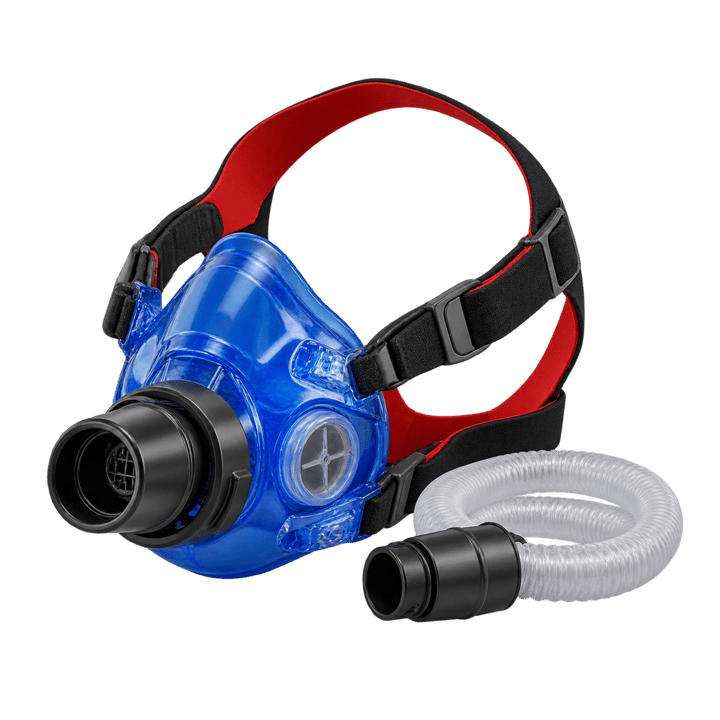
VO2 max is the most oxygen your body can use in a minute flat out, per kilogram of your weight. How much blood your heart can pump sets most of it, and it tracks how long people live as closely as smoking does.
Most people meet VO2 max as a number on their watch, sitting next to steps and sleep with no explanation. The name sounds like a lung test, and the famous numbers belong to cyclists and cross-country skiers, so it’s easy to file it under sport. But it’s the plainest measure there is of how strong your heart and blood are, and everyone has one.
We’d treat it as the fitness number to keep for life. It falls every decade, so holding it steady is already progress, and it answers to training within about two months.
What the number means
The unit is milliliters of oxygen per kilogram of body weight per minute (ml/kg/min). Sitting still, you use about 3.5, a unit doctors call 1 MET. In the US chart built from 16,278 lab treadmill tests, the middle man in his 40s reaches 35.3 flat out and the middle woman 25.7. At full effort, a typical 45-year-old man burns through about ten times the oxygen he uses on the couch.
The best endurance athletes are in the 90s. The highest number published in a journal is 96.7, from Norwegian cyclist Oskar Svendsen.
Think of it as a car’s horsepower divided by its weight. A bigger engine raises it, and so does a lighter car. That’s why losing weight lifts the number even when your heart hasn’t changed (see does losing weight increase VO2 max?).
What sets it
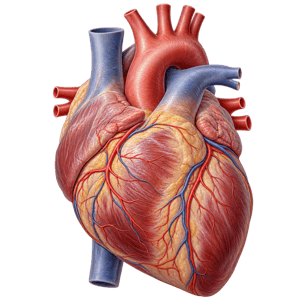
Oxygen goes from your lungs into your blood, your heart pumps that blood to your muscles, and the muscles pull the oxygen out to burn fuel. In healthy people the bottleneck is delivery. Exercise physiologists David Bassett and Edward Howley laid out the proof in 2000: when you change how much oxygen the blood carries (blood doping, thin mountain air, beta blockers), VO2 max moves with it. And when training raises VO2 max, it does it mainly by raising how much blood the heart can pump in a minute.
In a 2007 Norwegian trial, the heart’s output per beat rose about 10 percent after eight weeks of hard intervals, and VO2 max rose with it. Training works on the heart end of that chain (more in do breathing exercises grow your lungs?).
Why it’s useful outside sport
At the Cleveland Clinic, doctors followed 122,007 adults for a median of 8.4 years after a treadmill test. People below average for their age and sex had 1.41 times the risk of death of people above average. Smoking, in the same study, came with 1.41 too. The least fit quarter had 5.04 times the risk of the fittest 2 percent.
Those were people sent for a stress test, and fitness was estimated from how far they got on the treadmill, so it’s a link seen in medical records. The full story is in does VO2 max predict how long you live?
Find yours
Pick your watch or a test below for your number and its likely range. Then see where you stand for your age, or take the quiz for a plan to raise it.
What your result means, and what to do next
- Low, the bottom quarter for your age and sex. The Cleveland Clinic study found the most risk here, and the first step up is where most of the gain is.
- Below average. One 8 to 12 week block of training can move many people up a group.
- Above average or high. Hold it. The US middle drops about 4 points a decade, so a number that stays put climbs the ranks.
- The range around it is how far that source can be off. Only a lab test with a mask measures VO2 max.
- Check it once another way. A timed walk or run, or the everyday sanity checks, tells you if your watch runs high or low. Test it yourself
- Start the two layers. Cardio most days at a pace where you can still talk, and one or two hard sessions a week. How to raise it
- Retest the same way in 8 to 12 weeks. Same test, same route or same watch. Believe a change of more than 2 to 4 points.
5 sources
- Bassett DR and Howley ET, Limiting factors for maximum oxygen uptake and determinants of endurance performance, Medicine and Science in Sports and Exercise, 2000europepmc.org
- Helgerud J and others, Aerobic high-intensity intervals improve VO2max more than moderate training, Medicine and Science in Sports and Exercise, 2007europepmc.org
- Kaminsky LA and others, Updated reference standards for cardiorespiratory fitness measured with cardiopulmonary exercise testing (FRIEND), Mayo Clinic Proceedings, 2022mayoclinicproceedings.org
- Mandsager K and others, Association of Cardiorespiratory Fitness With Long-term Mortality Among Adults Undergoing Exercise Treadmill Testing, JAMA Network Open, 2018pmc.ncbi.nlm.nih.gov
- Hutchinson A, The VO2max record that (probably) wasn't, Sweat Science, February 2026sweatscience.substack.com