Breathing exercises raise VO2 max by growing your lungs
Short answerNo
On this page
No. In healthy people VO2 max is limited mostly by how much oxygen-filled blood the heart can pump, and training raises it by raising the heart’s output and the blood’s oxygen-carrying capacity. Breathing exercises are good for calm, but they don’t grow your lungs into a bigger VO2 max.
What we’d do
Keep your breathing practice for what it’s good at: settling your nerves, falling asleep, calming your heart rate in the moment. To raise VO2 max, train the heart. Do cardio most days and one or two hard sessions a week, like four 4-minute efforts. If you want an edge in long endurance events, breathing muscle training has some evidence, but it isn’t a shortcut to a bigger number.
If you remember three things
- The heart sets the ceiling. Change how much oxygen the blood delivers and VO2 max changes with it.
- Training grows the heart’s output and the blood. Stroke volume rose about 10 percent after eight weeks of intervals.
- Breathing muscle training helps endurance a little. It didn’t show up on the usual step-by-step tests to exhaustion.
Why people believe it
The name has oxygen in it, and oxygen comes in through your lungs. When you run hard it’s your breathing that feels like it’s about to give out, so it seems obvious that the lungs are the limit. “Lung capacity” sounds like the same thing as VO2 max, and plenty of breathing apps and gadgets lean on that idea.
A simple way to picture it
Think of a car with a big air intake and a small fuel pump. Fit an even bigger air intake and it won’t go any faster, because the pump can only push so much fuel to the engine. Upgrade the pump and the car speeds up.
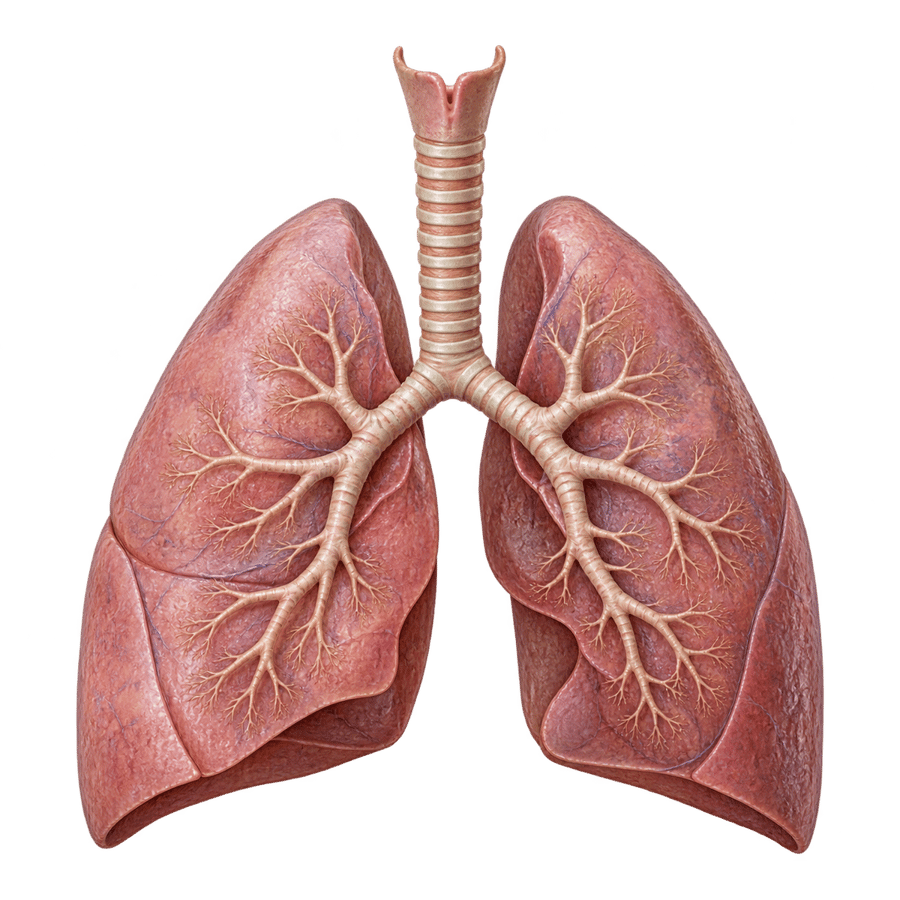
Your lungs are the air intake. Your heart is the pump. In healthy people, the pump is what runs out first.
What sets the limit
In 2000 the physiologists Bassett and Howley pulled together the evidence that VO2 max is limited by how much oxygen the heart and blood can deliver to working muscle. Three things point that way.
- Change the oxygen in the blood and VO2 max follows. Add red blood cells (blood doping) and it rises. Breathe thin air at altitude and it falls. Slow the heart with a beta blocker and it falls.
- Training raises VO2 max mainly by raising the heart’s maximum output, not by muscles pulling more oxygen out of each liter.
- Muscle has spare capacity. A small muscle given far more blood than usual uses an enormous amount of oxygen, so in a whole-body effort the muscle is waiting on the delivery.
Later studies fill in the picture. After eight weeks of 4-minute intervals, fit young men’s stroke volume, the blood pushed out per beat, rose about 10 percent, and their VO2 max rose with it (Helgerud 2007). In 78 healthy adults who trained for 6 to 12 weeks, the biggest single driver of their VO2 max gains was the rise in total hemoglobin, the oxygen-carrying part of the blood (Montero and Lundby 2017). And when trained people stopped training, the first drop in their VO2 max came from the heart pumping less blood per beat (Coyle 1984).
None of those changes is about lung size. They’re all about the pump and the blood.
Where do the lungs come in?
Air does make a difference at altitude. In a pressure chamber, eight trained endurance athletes lost 6.3 percent of their VO2 max for every 1,000 meters of simulated altitude, starting from as low as 800 meters (about 2,600 feet), and the oxygen saturation of their blood fell as the air got thinner. The air had less oxygen in it, and no breathing exercise changes the air.
Does breathing muscle training do anything?
It does something, just not this. A 2012 review of 46 studies in healthy people found that training the breathing muscles, by breathing against resistance or by sustained heavy breathing, improved endurance performance, more in less fit people and in longer events. But the gains showed up in tests at a steady load and in time trials, not in the usual step-by-step tests to exhaustion, the kind used to find VO2 max.
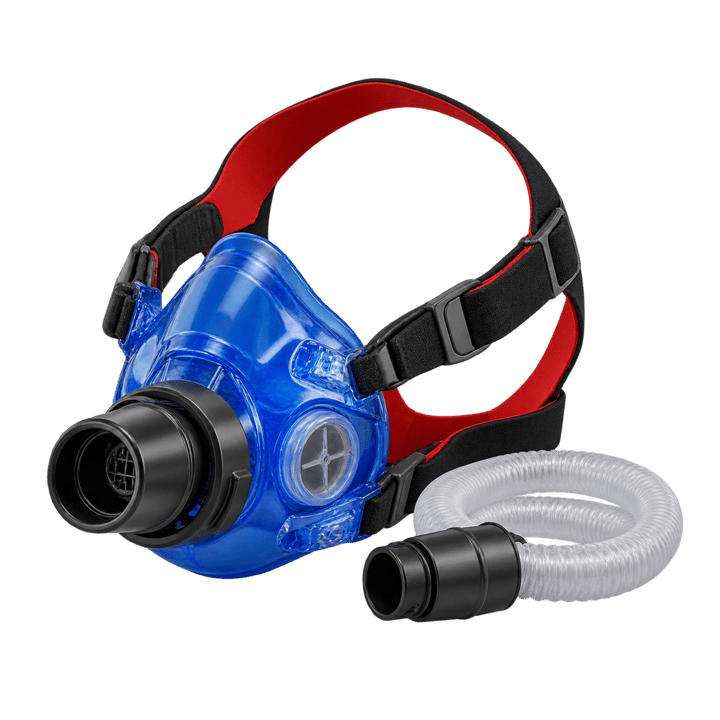
It may help you keep going longer. The review didn’t find it on the kind of test that finds your ceiling. Masks sold as altitude trainers came out the same way in a 2016 trial, and how to increase VO2 max naturally has that trial and the walks, stairs and hills that do raise it.
The best case for breathing exercises
“Breathwork lowers my heart rate, calms me down and my HRV goes up. Surely that’s fitness.”
The calm is real. Slow breathing swings your heart rate with each breath and can settle you fast, which breathwork.guide explains in why slow breathing calms your heart. But a calmer heart at rest isn’t a heart that can pump more blood at full effort. A long breath hold isn’t a fitness test either, which breathwork.guide covers in a long breath hold means you’re fit.
A bit of history
The first people to measure maximum oxygen intake did it by running. In the 1920s, the Nobel Prize winner A. V. Hill and his colleagues measured the oxygen used by themselves and other runners on an 85-meter grass track. From the start, the test measured the whole engine working flat out.
8 sources
- Porcari JP and others, Effect of wearing the Elevation Training Mask on aerobic capacity, lung function, and hematological variables, Journal of Sports Science and Medicine, 2016pmc.ncbi.nlm.nih.gov
- Bassett DR and Howley ET, Limiting factors for maximum oxygen uptake and determinants of endurance performance, Medicine and Science in Sports and Exercise, 2000europepmc.org
- Helgerud J and others, Aerobic high-intensity intervals improve VO2max more than moderate training, Medicine and Science in Sports and Exercise, 2007europepmc.org
- Montero D and Lundby C, Refuting the myth of non-response to exercise training: non-responders do respond to higher dose of training, Journal of Physiology, 2017europepmc.org
- Illi SK and others, Effect of respiratory muscle training on exercise performance in healthy individuals: a systematic review and meta-analysis, Sports Medicine, 2012europepmc.org
- Wehrlin JP and Hallén J, Linear decrease in VO2max and performance with increasing altitude in endurance athletes, European Journal of Applied Physiology, 2006europepmc.org
- Coyle EF and others, Time course of loss of adaptations after stopping prolonged intense endurance training, Journal of Applied Physiology, 1984europepmc.org
- Bassett DR, Scientific contributions of A. V. Hill: exercise physiology pioneer, Journal of Applied Physiology, 2002europepmc.org