Your watch knows your VO2 max
Short answerNo
On this page
No. No watch measures oxygen. It guesses your VO2 max from how hard your heart works at a pace it can measure, plus your age, sex and weight. In a 2026 lab check, Apple Watch Series 10 came in 6.25 points low on average and put only 5 of 35 people in their right fitness band.
What we’d do
Use your watch for the trend and a field test for the level. Wear it on outdoor walks or runs on flat ground, keep your weight and max heart rate up to date in its settings, and watch which way the number moves over a few months. Once a season, run 12 minutes or walk a fast mile to check where you really stand. Don’t take a single watch number as your rank for your age.
If you remember three things
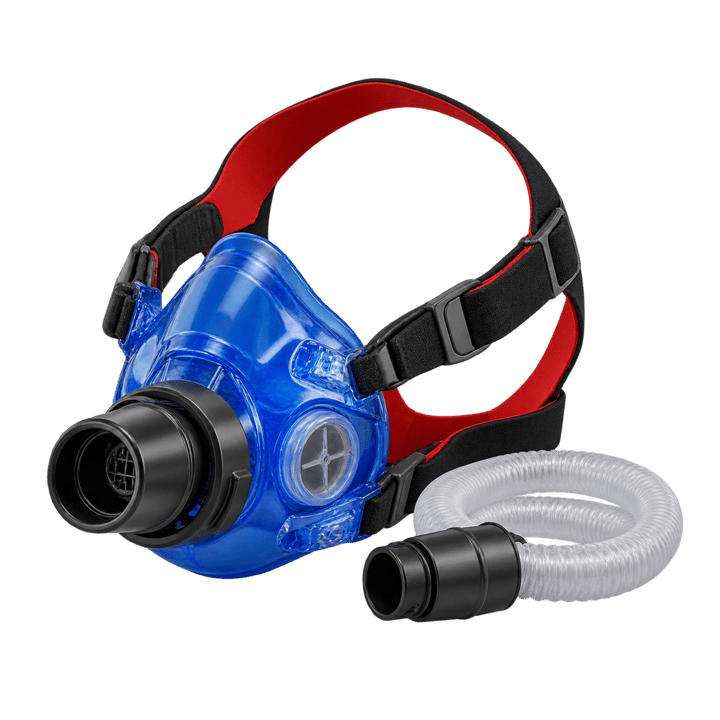
- A watch guesses from heart rate and pace. Only a mask that collects your breath measures oxygen.
- It can be several points off for you. Apple Watch Series 10 ran 6.25 low on average, with individual errors from about 18 low to 6 high.
- Compare the watch only with itself. Use the same watch and the same kind of workout, months apart.
Why people believe it
The number sits right there on your wrist with a decimal point, next to your heart rate and your steps, which it counts directly. Apple calls it your cardio fitness and tells you whether it’s low for your age. It’s easy to assume it’s measured the same way.
A simple way to picture it
Imagine trying to guess a car’s horsepower without a dyno. You drive it on a flat road at 60 mph and look at the rev counter. A car cruising at 2,000 rpm probably has more power in reserve than one straining at 5,000. It’s a decent way to guess, as long as the road is flat and the gauges are right.
Your watch does the same thing. GPS gives it your pace, the optical sensor gives it your heart rate, and it assumes a top heart rate. If your heart rate is low at a fast pace, it decides you have a big engine. Anything that throws off one of those three, like a hill, a hot day, a heart rate medicine or the wrong max heart rate in your settings, throws off the guess.
What the lab checks found
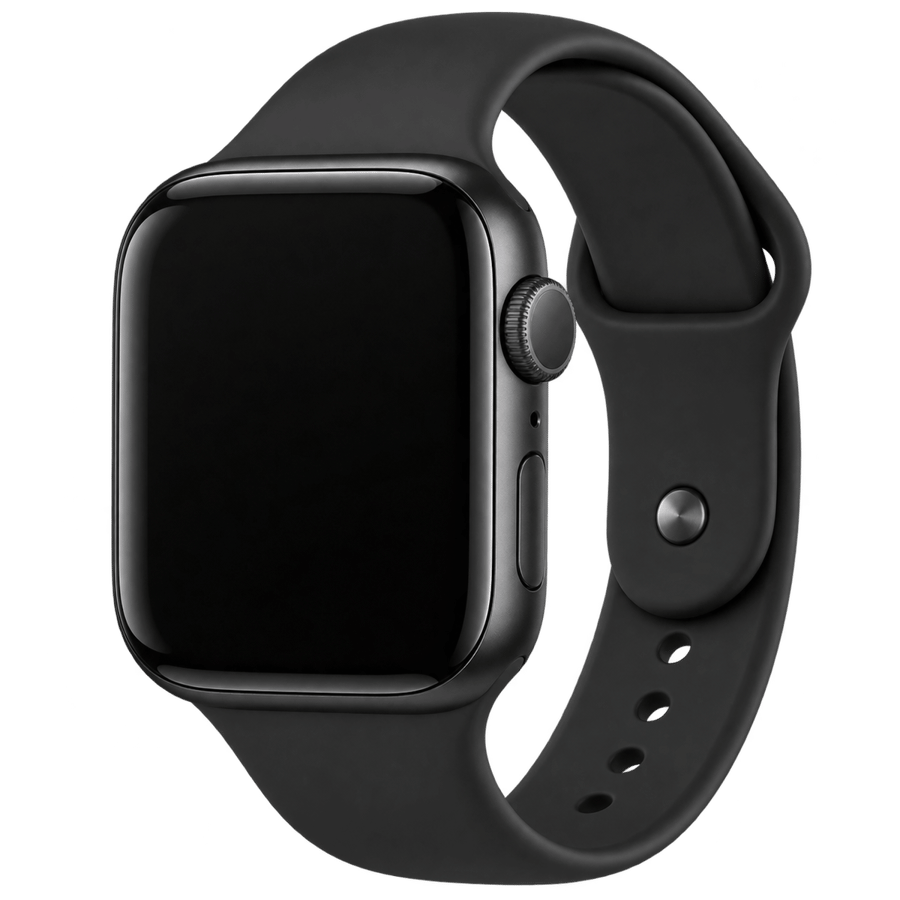
Apple Watch Series 10
40 healthy adults tested, 35 analyzed, average age 22.7, mostly very fit. Lambe and colleagues, 2026
The watch came in 6.25 points low on average, and missed by 6.79 points on average either way, about 13 percent. Individual errors ran from about 18 low to 6 high. It put 5 of 35 people (14 percent) in their right FRIEND fitness band and 12 more one band off.
Young, fit people. The authors said the watch may be useful for studying groups, not for judging one person.
Garmin fēnix 6
19 healthy adults, active and sedentary. Carrier and colleagues, 2025
Off by about 7 percent on average, which the authors counted as accurate.
A small group and an older watch.
Every wearable study, pooled
14 studies. The INTERLIVE network, 2022
Devices that estimate from exercise were right on average, with individual errors up to about 10 points either way. Devices that estimate from resting data ran about 2 points high, with errors from 13 low to 17 high.
Mostly older models. The authors called the individual error large.
A 2025 review of 13 studies, mostly Garmin watches paired with chest straps, found the estimates valid for untrained adults, recreational athletes and team sports players. For Fitbit, Oura and WHOOP’s current models, we haven’t found an independent lab check.
What throws the guess off
- Indoor workouts. On Apple Watch they don’t count at all, including gym machines. Only Outdoor Walk, Outdoor Run and Hiking workouts feed the estimate.
- Hills. The study above describes Apple’s estimate as needing ground under a 5 percent slope.
- Heart rate medicines. Apple says conditions or medicines that limit your heart rate might push it too high.
- A wrong max heart rate or weight. Garmin says to fill in your profile and set your max heart rate for the most accurate estimate. In 3,320 healthy adults, about 1 in 3 had a real max more than 11 beats from the best age formula.
- Not enough data yet. Garmin’s manual says the estimate “may seem inaccurate at first,” and Apple needs several outdoor workouts before it gives one.
The best case for the watch
“Watches that use exercise data were right on average across 14 studies. That’s good enough.”
On average, yes. For a group of people, the errors in both directions mostly cancel, which is why researchers find watches useful for big studies. But you aren’t an average. The same pooled studies had errors of up to about 10 points either way for one person, and the meaningful change in VO2 max the INTERLIVE group named is 1.75 to 3.5 points. A watch can’t tell you whether you’re at 38 or 44. Apple Watch’s error in the 2026 study was mostly in one direction, low, which means a typical wearer in that study was fitter than the watch said.
Where the watch earns its place is the trend. It sees dozens of your walks and runs that you’d never test in a lab. If you keep the conditions similar, a slow climb over months probably means something. The authors of the Apple study said the trend still needs to be checked over time.
How far off is yours likely to be?
| Where the number comes from | How far to trust it |
|---|---|
| Apple Watch | The lab number is likely about 6 higher, give or take about 6 |
| Garmin or another running watch | Centered, give or take about 5 |
| Fitbit, Oura, WHOOP | Give or take about 8, with no independent test of current models |
| A lab test with a mask | Measured |
These are the bands What’s my VO2 max? draws for about 2 in 3 people. An Apple Watch number of 38 most likely means about 44, somewhere between 38 and 50. More in how to measure it, and hrv.guide covers the other number your Apple Watch guesses.
8 sources
- Lambe R and others, Accuracy of VO2 max estimates from Apple Watch Series 10, Mayo Clinic Proceedings: Digital Health, 2026pmc.ncbi.nlm.nih.gov
- Apple Support, Track your cardio fitness levels, published 2026-09-14support.apple.com
- Garmin, Forerunner 245 owner's manual, Getting your VO2 max estimate for running, checked 2026-11-14www8.garmin.com
- Molina-Garcia P and others, Validity of estimating the maximal oxygen consumption by consumer wearables: a systematic review with meta-analysis and expert statement of the INTERLIVE network, Sports Medicine, 2022pmc.ncbi.nlm.nih.gov
- Carrier B, Marten Chaves S and Navalta JW, Validation of aerobic capacity (VO2max) and pulse oximetry in wearable technology, Sensors, 2025pmc.ncbi.nlm.nih.gov
- Železnik Mežan L, Accuracy of wearables for determining the maximal oxygen uptake and lactate threshold: a qualitative systematic review, Frontiers in Sports and Active Living, 2025pmc.ncbi.nlm.nih.gov
- Nes BM and others, Age-predicted maximal heart rate in healthy subjects: the HUNT fitness study, Scandinavian Journal of Medicine and Science in Sports, 2013europepmc.org
- Kaminsky LA and others, Updated reference standards for cardiorespiratory fitness measured with cardiopulmonary exercise testing (FRIEND), Mayo Clinic Proceedings, 2022mayoclinicproceedings.org