How do you measure VO2 max without a lab?
On this page
Run as far as you can in 12 minutes, or walk a mile as fast as you can and take your heart rate at the finish. Each lands within about 4 to 7 points of a lab mask test for most people. A watch is about as close on average, and often further off for one person.
What we’d do
Pick one method and stick with it. If you have a watch, use it for the trend, and check it once a season with a 12-minute run if you run, or the 1-mile walk if you don’t. Do the test the same way each time, on the same course, rested and warmed up. Believe a change only when it’s bigger than about 2 to 4 points. Get a lab test if you train seriously or just want the real number once.
If you remember three things
- Only a lab with a mask measures VO2 max. Field tests and watches estimate it from distance, time or heart rate.
- Each method has its own error. About 4 points for a walk or beep test, about 7 for the 12-minute run, and 5 or more for most watches.
- Compare a method only with itself. A change smaller than 2 to 4 points is inside the noise.
Why isn’t the watch number a measurement?
It looks like one. It comes with a decimal, it sits next to your heart rate and step count, and it updates on its own, so people treat it like a number off a scale.
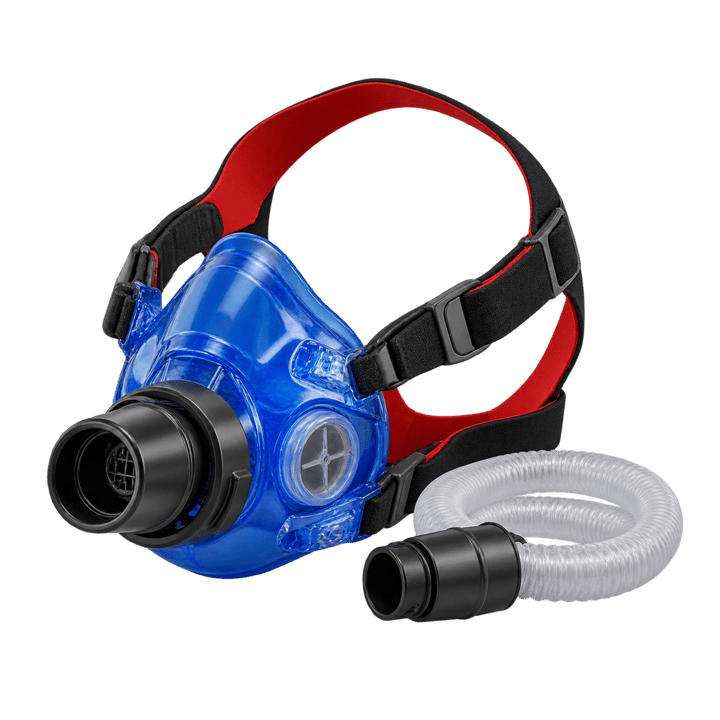
No watch can measure oxygen. Only a mask that captures your breath can do that. A watch guesses, from how hard your heart works at a pace it can measure with GPS. A field test guesses too, from how far or how fast you went. The guesses are often good on average and loose for any one person, and each kind of guess is off in its own way.
How did a 12-minute run replace the lab?
In the 1960s, Dr. Kenneth Cooper, stationed at Lackland Air Force Base in Texas, had a problem. The treadmill test with a mask was the gold standard, but it tested one person at a time, and there were about 900,000 people on active duty in the Air Force. At the height of the Cold War, there was worry that American troops were less fit than Soviet ones, and nobody could test them all.
Cooper asked 115 Air Force officers and airmen to run as far as they could in 12 minutes. Within three days, each one did a full treadmill test with a mask in his lab. Distance and VO2 max lined up closely, with a correlation of 0.897. He published it in the Journal of the American Medical Association in January 1968.
Counting laps for a whole squadron was hard, so Cooper worked out that the time to run 1.5 miles predicts the 12-minute result almost perfectly. That’s why most people who test large groups use the 1.5-mile run instead.
A simple way to picture it
Imagine trying to guess a car engine’s power without a dyno. You could put it on a flat road at 60 mph and see how hard it revs. A car cruising at 2,000 rpm probably has more power in reserve than one screaming at 5,000.
That’s what a watch does. It sees your pace and your heart rate, assumes a maximum heart rate from your age or your settings, and works out how much room you have left. If the road was really uphill, or the car was hot, or the rev counter was wrong, the guess is off.
Which test should you do?
| Test | What you do | How close | Built on |
|---|---|---|---|
| Lab test with a mask | Run or ride while the treadmill gets steeper or the bike gets harder, until you can’t go on | Measured, the number everything else is checked against | |
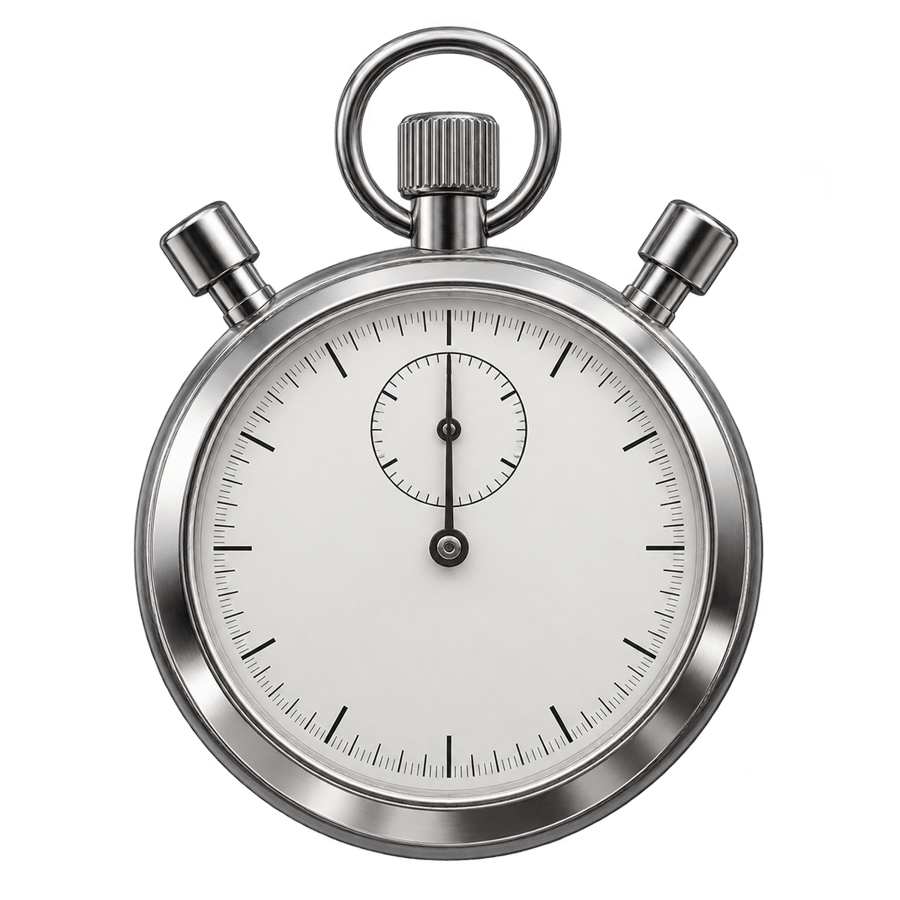
| 12-minute run | Run as far as you can in 12 minutes on a track | About 7 points either way. In 73 college athletes it came out about 6 low on average | 115 US Air Force men, 1968 |
| 1.5-mile run | Run 1.5 miles as fast as you can | No published error for the formula, so we use the 12-minute run’s | The Cooper Institute’s formula |
| 1-mile walk | Walk a mile as fast as you can, take your heart rate at the finish | About 4.4 points for someone who weighs 80 kg (176 lb) | 343 adults aged 30 to 69 |
| Beep test | Run back and forth over 20 meters to beeps that speed up every minute | About 4.4 points | 77 adults aged 18 to 50 |
| Resting heart rate | Divide your max heart rate by your resting rate | About 2.7 points with a measured max, 4.7 with an estimate | 46 well-trained men aged 21 to 51 |
“How close” here means the likely range for about 2 in 3 people.
The 12-minute run is the one we’d pick if you run. In 12 minutes, 1.5 miles (2,414 meters) works out to about 42.7, and 1.25 miles to about 33.7. It’s simple and you can do it on any track. A 2026 study of 73 college athletes found it came out 6.0 points low on average, with individual errors from about 20 low to 8 high, so very fit people may be better than it says.
The 1-mile walk is the one we’d pick if you don’t run, or if running hurts your joints, as the Cooper Institute suggests too. It uses your time, your heart rate at the finish, your weight, age and sex. A 50-year-old woman who weighs 170 lb and walks the mile in 15 minutes with a finishing heart rate of 140 comes out at 29.5, give or take 4.6, about the 83rd percentile for her age. In the original study each person walked at least twice, and the researchers used the fastest walks.
The beep test suits team sports and anyone with a gym floor. Level 8 works out to about 44.6.
The resting heart rate ratio needs no exercise at all, but it was built on 46 well-trained men, so it’s rough for everyone else.
How do watches estimate it?
Apple Watch estimates it during Outdoor Walk, Outdoor Run and Hiking workouts. Indoor workouts, including ones on gym machines, don’t count at all. It uses your age, sex, weight, height and medications that affect heart rate, and it reports between 14 and 65. The lab study below describes it as needing ground under a 5 percent slope, good GPS and heart rate signal, and your heart rate up by about 30 percent from rest. Apple says that conditions or medications that limit your heart rate can push it too high.
Garmin needs at least 10 minutes of running outdoors with heart rate. Garmin’s own manual says to fill in your profile and set your maximum heart rate for the most accurate estimate, and that “the estimate may seem inaccurate at first.”
Fitbit, Oura and WHOOP estimate it too. We haven’t found an independent lab check of their current estimates.
Getting an accurate number from your Apple Watch walks through what each watch needs, step by step, and the workouts that feed it clean data.
How close are the watches?
Apple Watch Series 10
40 healthy adults tested, 35 analyzed, average age 22.7, mostly very fit. Lambe and colleagues, 2026
The watch came in 6.25 points low on average, with individual errors from about 18 low to 6 high. It put only 5 of 35 people in their right FRIEND fitness band, and 12 more one band off.
Young, fit people. Older or less fit people may see a different error.
Garmin fēnix 6
19 healthy adults, active and sedentary. Carrier and colleagues, 2025
Off by about 7 percent on average against a lab test, which the authors counted as accurate.
A small group and an older watch.
Every wearable study, pooled
14 studies. The INTERLIVE network, 2022
Watches that estimate from exercise were right on average, with individual errors up to about 10 points either way. Devices that estimate from resting data ran about 2 points high, with errors from 13 low to 17 high.
Mostly older models.
A 2025 review of 13 studies, mostly Garmin watches with chest straps, found them valid for untrained adults, recreational athletes and team sports players.
A watch is good at telling a group’s average and rough at telling where one person stands. In the Apple study’s words, its estimates “showed poor individual-level agreement” with the lab. For you, that means use it to watch your own trend, under the same conditions, and check its level once with a field test. Your watch knows your VO2 max has more on why. The same heart-rate-and-pace guess is behind your watch’s calorie count, which tdee.guide found is further off still.
How do you run a test well?
- Same route, same way, every time. A track is best. Don’t mix a track test with a treadmill test. The Cooper Institute says to do it the same way both times.
- Rested. Not the day after a hard session, and not ill.
- Warmed up. About 10 minutes easy before you start.
- Flat and mild. Hills, wind and heat all make you slower for the same fitness. So does altitude. In trained endurance athletes, VO2 max fell 6.3 percent for every 1,000 meters (3,300 feet) up.
- All out for the run, brisk for the walk. The walk test assumes you walk as fast as you can without running.
- Write it down. Date, distance or time, heart rate, conditions.
If exercise brings chest pain, fainting or unusual breathlessness, don’t do an all-out test until a doctor has checked you. See is it safe to push hard?.
When is a change real?
The INTERLIVE group put a meaningful change at 1.75 to 3.5 ml/kg/min, since gains of that size have gone with lower risk in the big studies. That’s smaller than a single watch’s error for one person, which is why you only compare a method with itself.
Our rule of thumb is the same method, the same conditions, 8 to 12 weeks apart, and a change of more than 2 to 4 points before you believe it. A watch number that jumps 3 points the week you changed your weight in the app hasn’t measured a change in your heart.
Try it
Pick where your number comes from, and the range it sits in comes with it. For a treadmill test or your mile pace, use test it yourself, and to see whether your watch’s number fits what you can do, try what a real VO2 max can do.
What your result means, and what to do next
- Low, the bottom quarter for your age and sex. The Cleveland Clinic study found the most risk here, and the first step up is where most of the gain is.
- Below average. One 8 to 12 week block of training can move many people up a group.
- Above average or high. Hold it. The US middle drops about 4 points a decade, so a number that stays put climbs the ranks.
- The range around it is how far that source can be off. Only a lab test with a mask measures VO2 max.
- Check it once another way. A timed walk or run, or the everyday sanity checks, tells you if your watch runs high or low. Test it yourself
- Start the two layers. Cardio most days at a pace where you can still talk, and one or two hard sessions a week. How to raise it
- Retest the same way in 8 to 12 weeks. Same test, same route or same watch. Believe a change of more than 2 to 4 points.
16 sources
- Farrell SW, 50 years of the Cooper 12-minute run, The Cooper Institute, 2018cooperinstitute.org
- Jegatheesan SL and others, Unlocking the connection: hematological status, dietary iron intake and endurance in Indian female athletes, Physical Activity and Nutrition, 2025 (the 12-minute run formula as printed)pmc.ncbi.nlm.nih.gov
- Soares EM and others, Cooper's 12 minute run systematically underestimates VO2 max in collegiate team sport athletes, International Journal of Exercise Science, 2026pmc.ncbi.nlm.nih.gov
- Kline GM and others, Estimation of VO2max from a one-mile track walk, gender, age, and body weight, Medicine and Science in Sports and Exercise, 1987europepmc.org
- Predovan D and others, Assessment of the relationship between executive function and cardiorespiratory fitness in healthy older adults, Frontiers in Psychology, 2021 (the 1-mile walk equation as printed)pmc.ncbi.nlm.nih.gov
- Léger LA and others, The multistage 20 metre shuttle run test for aerobic fitness, Journal of Sports Sciences, 1988europepmc.org
- Léger L and Gadoury C, Validity of the 20 m shuttle run test with 1 min stages to predict VO2max in adults, Canadian Journal of Sport Sciences, 1989europepmc.org
- Uth N and others, Estimation of VO2max from the ratio between HRmax and HRrest, the Heart Rate Ratio Method, European Journal of Applied Physiology, 2004europepmc.org
- Lambe R and others, Accuracy of VO2 max estimates from Apple Watch Series 10, Mayo Clinic Proceedings: Digital Health, 2026pmc.ncbi.nlm.nih.gov
- Apple Support, Track your cardio fitness levels, published 2026-09-14support.apple.com
- Garmin, Forerunner 245 owner's manual, Getting your VO2 max estimate for running, checked 2026-11-14www8.garmin.com
- Carrier B, Marten Chaves S and Navalta JW, Validation of aerobic capacity (VO2max) and pulse oximetry in wearable technology, Sensors, 2025pmc.ncbi.nlm.nih.gov
- Železnik Mežan L, Accuracy of wearables for determining the maximal oxygen uptake and lactate threshold: a qualitative systematic review, Frontiers in Sports and Active Living, 2025pmc.ncbi.nlm.nih.gov
- Molina-Garcia P and others, Validity of estimating the maximal oxygen consumption by consumer wearables: a systematic review with meta-analysis and expert statement of the INTERLIVE network, Sports Medicine, 2022pmc.ncbi.nlm.nih.gov
- Wehrlin JP and Hallén J, Linear decrease in VO2max and performance with increasing altitude in endurance athletes, European Journal of Applied Physiology, 2006europepmc.org
- Kaminsky LA and others, Updated reference standards for cardiorespiratory fitness measured with cardiopulmonary exercise testing (FRIEND), Mayo Clinic Proceedings, 2022mayoclinicproceedings.org