How do you get an accurate VO2 max from your Apple Watch?
On this page
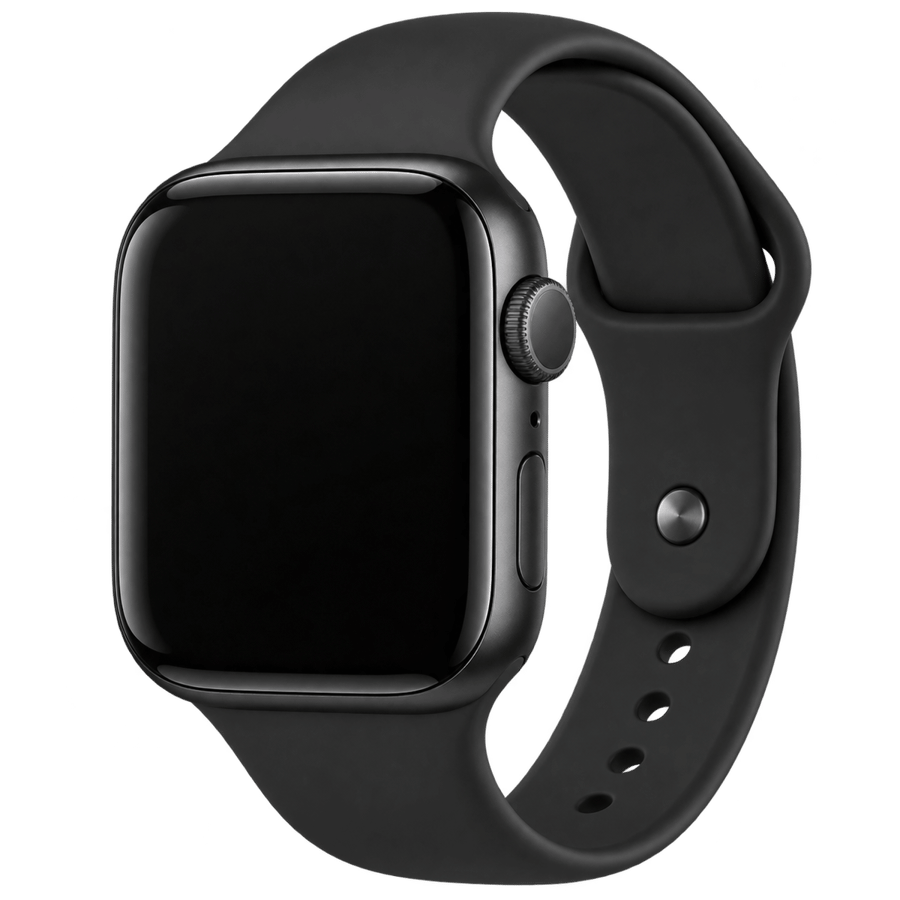
Apple Watch only estimates VO2 max from outdoor walks, runs and hikes, on fairly flat ground, with GPS and a good heart rate signal, and with your heart rate up about a third of the way from resting to max. Give it a brisk flat walk or run outdoors a few times a week, keep your age, weight and heart medicines current in the Health app, and expect it to come in a few points under a lab test.
What we’d do
Pick one flat outdoor loop and make it your watch route. Walk it briskly or run it, 20 to 30 minutes, two or three times a week, with the Outdoor Walk or Outdoor Run workout running. Do the hard training wherever you like, on hills, a bike or a treadmill, because the fitness you build there shows up on your next flat walk. Then check the watch once against a real test, a 12-minute run or a fast mile walk, and from then on compare it only with itself.
If you remember three things
- Only outdoor walks, runs and hikes count. Treadmills, bikes and gym sessions don’t feed the estimate at all.
- Flat ground and real effort. Apple’s own paper asks for a grade under 5 percent and a heart rate about 30 percent of the way from resting to max.
- It runs low. In the 2026 lab check, Series 10 came in 6.25 points under a mask test on average.
Why is my VO2 max missing, stuck or low?
When the number won’t show up or won’t move, the watch has usually ignored the training. Apple’s support page says indoor workouts, including the ones on gym equipment, don’t count toward the estimate. Only three workouts in the Workout app do: Outdoor Walk, Outdoor Run and Hiking. A month of spin classes and treadmill intervals can raise your real fitness and leave the number exactly where it was.
The first number also takes a while. Apple says you need to wear the watch for at least 24 hours, then do several of those outdoor workouts, and its white paper says your first one won’t produce an estimate. It’s patient once it starts, though. In Apple’s study, more than 90 percent of people with at least one outdoor walk, run or hike longer than three minutes got an estimate, and about 79 percent of outdoor workouts longer than six minutes produced one.
If yours seems stuck low, the cause is often what you fed it, which the list further down covers. Why isn’t my VO2 max updating? and why did it drop? go through the usual ones.
How does the watch work it out?
No watch measures oxygen. Apple Watch tracks how hard your heart works at a pace it knows from GPS and its motion sensors, and works out from that how much oxygen you’d use if you kept going to your max heart rate. Apple calls this a submaximal estimate, and it’s why you never have to go flat out for it.
It’s like guessing a car’s horsepower from how hard the engine revs at 40 mph on a flat road. A strong engine barely revs, a small one screams. The guess only works if the road is flat, the car isn’t towing anything, and you know where the redline is. For you, the redline is your max heart rate, which the watch predicts from your age. That’s why it needs your real age, and needs to know about any medicine that holds your heart rate down.
Step by step
- Set up your Health details. Apple’s estimate uses your age, sex, weight, height and any medicines that limit your heart rate. Keep your weight current, and if you take a beta blocker or a calcium channel blocker, add it.
- Wear it all day, not just for workouts. Apple’s paper says wearing it through the day, beyond workouts, makes the estimate more accurate.
- Start an Outdoor Walk, Outdoor Run or Hiking workout. Not Other, not Indoor Walk.
- Choose flat ground with open sky. The paper asks for a grade of less than 5 percent up or down, and good GPS.
- Get your heart rate up. About 30 percent of the way from your resting heart rate to your max. For someone of 40 with a resting heart rate of 65 and a max of about 180, that’s about 100 beats a minute, which a brisk walk usually reaches.
- Repeat it. More outdoor workouts and harder efforts both make it more accurate, Apple says.
- Find it. In the Health app, go to Browse, then Heart, then Cardio Fitness. Show All Cardio Fitness Levels compares you with your age and sex.
The 30 percent works out as your resting heart rate plus 0.3 times the gap to your max. Your max, roughly, is 208 minus 0.7 times your age (Tanaka 2001), and your heart rate zones works it out for you.
What throws it off?
Apple’s own white paper lists them. Each one moves the number without you getting any fitter or less fit.
| What happens | Which way it moves |
|---|---|
| A wrong age, sex or weight in Health | Off every time, either way |
| A heart rate medicine you haven’t entered | Too high. In Apple’s data the error fell from 11.8 to 1.6 points once people entered it |
| A heavy backpack, carrying a child, pushing a stroller, walking on sand | Too low, since you’re working harder than the watch can see |
| Heat, dehydration, caffeine, arriving at altitude | Too low, since they raise your heart rate |
| Pregnancy | Off, from the normal changes in the heart |
| Arrhythmias, a pacemaker, a condition that limits exercise | Less accurate |
The range has edges too. Apple Watch shows numbers from 14 to 65, so a fitter athlete sees 65 and nothing above it.
How far off is it?
Apple tested its 2021 method on 221 people with an average age of 55 and found it within about 1.4 points of their reference, give or take 4.7. But that reference was itself worked out from a test short of max, not measured to exhaustion.
Then a team tested Apple Watch Series 10 against a real maximal mask test on a treadmill. 40 healthy adults wore the watch until it gave an estimate, and 35 were analyzed. The watch came in 6.25 points low on average, 95 in 100 people fell somewhere between 18 points under and 6 points over, and only 5 of 35 landed in their right fitness band on the US chart. They were young, 22.7 on average, and the gap was bigger in the fittest: about 7.8 points in the 25 already in the top fifth of the US chart, against 2.4 in the other 10, though the authors called that a hint to test, since the groups were small. Is Apple Watch VO2 max accurate? and your watch knows your VO2 max go through it.
Use the watch for your trend and a real test for your rank. Test it yourself turns a mile walk, a run or a treadmill into a number, and what a real VO2 max can do tells you whether your watch’s number is plausible.
Which workouts give it good data and raise the number?
| Workout | What it does for the watch | What it does for you |
|---|---|---|
| A flat outdoor walk or run, 20 to 30 minutes, brisk | Feeds the estimate clean data every time | Builds the steady layer |
| A 4x4 on a flat track or loop: 4 hard minutes, 3 easy, four times | It’s still an Outdoor Run, and Apple says harder efforts help accuracy | Raises VO2 max the most per minute. 7.2 percent in eight weeks in the famous trial |
| Hill repeats, a bike 4x4, treadmill intervals | Nothing. Too steep, or indoors | The same gains, shown later on your flat route |
| A long easy hike on rolling trails | Only the flatter stretches can count | Long steady work, good for the base |
The trick is to keep your watch route the same. Same loop, similar weather, similar time of day, and the watch’s trend becomes something you can believe. How to raise it has the full week, and the 4x4 timer runs the hard session.
What about Garmin?
Garmin’s estimate comes from Firstbeat, and its manual sets the rules. Run outdoors with GPS, with heart rate from the wrist or a chest strap, at moderate or high intensity reaching at least 70 percent of your max heart rate, for at least 10 minutes, then save the run. For cycling it needs a power meter and at least 20 minutes of steady, hard riding. Garmin says the estimate may seem off at first because the watch needs a few runs to learn you, and that setting up your profile and your max heart rate gives the most accurate number. You can also stop trail runs from counting.
Two things differ from Apple. Garmin’s color bands, Poor to Superior, use ratings from the Cooper Institute, so they won’t match the percentile this site gives you from the US FRIEND chart. And Garmin has done better in lab checks. Across 14 studies, watches that estimate from your runs came out right on average, give or take about 5 points (INTERLIVE 2022). A Garmin fēnix 6 missed by about 7 percent on average in 19 adults (Carrier 2025). A 2025 review of 13 studies, mostly Garmin, found the estimates valid in untrained adults and recreational athletes and doubtful in elite endurance athletes. In one of its studies the error dropped from 5.6 to 1.1 percent after a second run, which fits Garmin’s advice to give it a few. How do I see my VO2 max on Garmin? has the screens, and is Garmin VO2 max accurate? the studies.
Fitbit, Oura and WHOOP make estimates too, but nobody has tested their current models against a lab, so treat them as rougher still.
The same watch, other numbers
The heart rate your watch uses for VO2 max also drives its other guesses. hrv.guide covers HRV on Apple Watch and Garmin, tdee.guide covers watch calorie counts, and oxygen.guide explains why VO2 max isn’t blood oxygen.
10 sources
- Apple Support, Track your cardio fitness levels, published 2026-09-14support.apple.com
- Apple, Using Apple Watch to estimate cardio fitness with VO2 max, May 2021apple.com
- Lambe R and others, Accuracy of VO2 max estimates from Apple Watch Series 10, Mayo Clinic Proceedings: Digital Health, 2026pmc.ncbi.nlm.nih.gov
- Garmin, Forerunner 970 owner's manual, About VO2 max estimates, checked 2026-11-15www8.garmin.com
- Garmin, Forerunner 245 owner's manual, Getting your VO2 max estimate for running, checked 2026-11-15www8.garmin.com
- Carrier B, Marten Chaves S and Navalta JW, Validation of aerobic capacity (VO2max) and pulse oximetry in wearable technology, Sensors, 2025pmc.ncbi.nlm.nih.gov
- Železnik Mežan L, Accuracy of wearables for determining the maximal oxygen uptake and lactate threshold: a qualitative systematic review, Frontiers in Sports and Active Living, 2025pmc.ncbi.nlm.nih.gov
- Molina-Garcia P and others, Validity of estimating the maximal oxygen consumption by consumer wearables: a systematic review with meta-analysis and expert statement of the INTERLIVE network, Sports Medicine, 2022pmc.ncbi.nlm.nih.gov
- Tanaka H, Monahan KD and Seals DR, Age-predicted maximal heart rate revisited, Journal of the American College of Cardiology, 2001europepmc.org
- Helgerud J and others, Aerobic high-intensity intervals improve VO2max more than moderate training, Medicine and Science in Sports and Exercise, 2007europepmc.org